
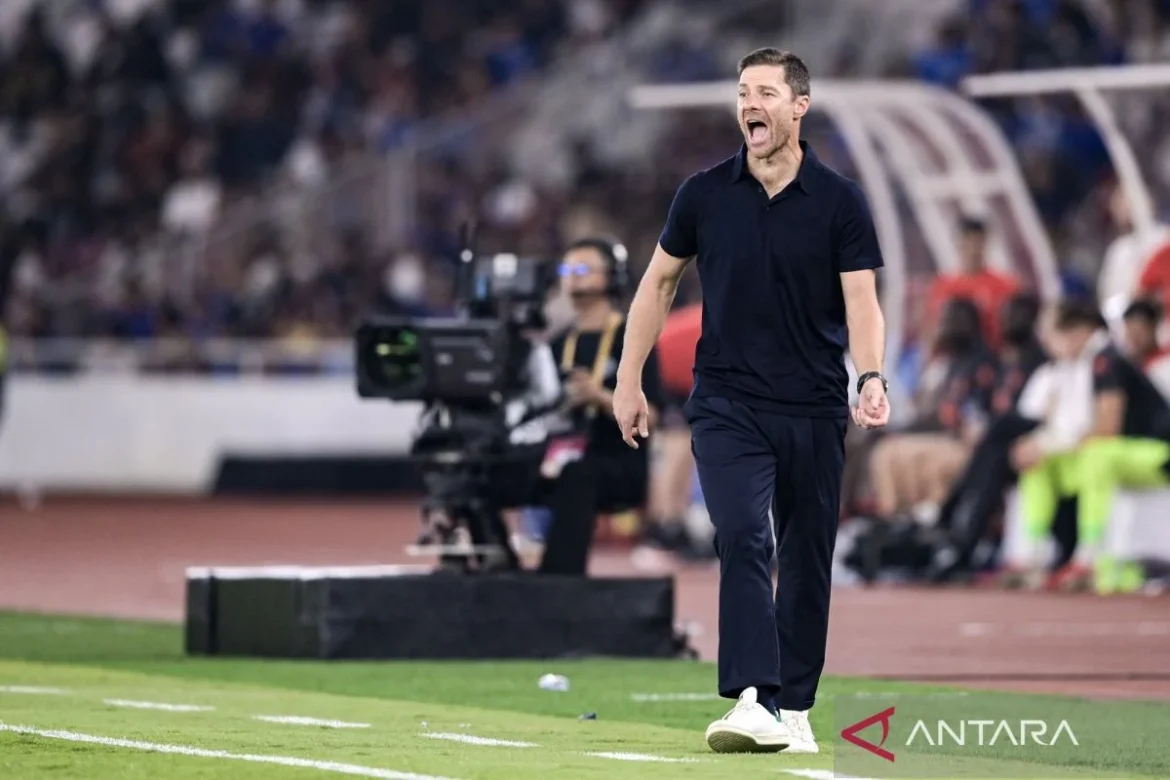
The landscape of English football witnessed a seismic shift this week as Clearlake Capital finalized the complete acquisition of Chelsea Football Club, effectively ending the shared ownership era of Todd Boehly and Mark Walter. The transaction, which saw Clearlake increase its stake from a majority 61.5 percent to total ownership, marks a definitive pivot in the strategic direction of the London-based club. For Chelsea manager Xabi Alonso, this consolidation of power represents a critical juncture, promising the clarity and singular vision necessary to propel the team into its next phase of development.
Speaking ahead of a pivotal Premier League clash against Brentford, Alonso underscored the significance of the transition. The Spanish tactician, who has been instrumental in shaping the club’s tactical identity since his arrival, views the shift not merely as a change in the boardroom, but as a catalyst for long-term operational success.
A New Chapter in Stamford Bridge History
The restructuring of Chelsea’s ownership marks the end of a turbulent period of transition that began in 2022 following the departure of Roman Abramovich. Todd Boehly and Mark Walter, who were central to the initial acquisition, have divested their respective 12.83 percent stakes, clearing the path for Behdad Eghbali and the Clearlake Capital team to assume full stewardship.
For years, observers and fans alike have questioned the long-term viability of the multi-owner model, citing potential friction in decision-making and project prioritization. With Clearlake now holding the reins, the ambiguity surrounding the club’s ultimate decision-making authority has been effectively neutralized. Eghbali, a founding partner at Clearlake, is expected to take a more hands-on approach, streamlining the communication between the front office and the coaching staff.
"I think it is an important day for the club when a major shift in the organizational structure occurs," Alonso remarked during his pre-match press conference. "Clarity at the top level is essential for any elite football project. Knowing exactly who is steering the ship allows everyone at Cobham to focus exclusively on the pitch."
The Chronology of the Acquisition
The path to this moment has been paved with intense scrutiny and rapid strategic adjustments. Since the 2022 takeover, Chelsea has undergone a massive overhaul of its squad, staff, and commercial operations.
- May 2022: The consortium led by Todd Boehly and Clearlake Capital reaches an agreement to purchase Chelsea Football Club for approximately £4.25 billion, subject to regulatory approval.
- June 2022: The sale is officially completed, ushering in a period of unprecedented investment in new players and infrastructure.
- 2023-2024: The club navigates a challenging transition period, marked by managerial changes and a restructuring of the scouting and recruitment departments.
- Late 2025: Speculation mounts regarding the long-term commitment of various shareholders as the club seeks to stabilize its financial position under new Profit and Sustainability Rules (PSR).
- January 2026: Clearlake Capital announces the buyout of Boehly and Walter, consolidating 100 percent control under their investment vehicle.
Building the Project: The Role of Leadership
Alonso’s public support for the new arrangement is rooted in his personal relationship with Eghbali. The manager revealed that the Clearlake partner was a primary advocate for his appointment, traveling to Madrid to pitch the club’s vision directly to him. This rapport appears to be a cornerstone of the current stability at the club.
"Behdad came to see me before I signed. He explained the project, the long-term goals, and the commitment they were willing to make to the team’s development," Alonso noted. "That direct line of communication was vital. Working with someone who has a clear vision for where we need to be in three or five years makes the day-to-day work much easier."
For the coaching staff, this signifies an end to the "uncertainty era." In professional football, the alignment between ownership, the sporting director, and the manager is the primary predictor of sustained success. With the power structure now monolithic, the club is expected to move away from the high-volume transfer strategy of the past three years toward a more surgical, data-driven approach to squad building.
Analyzing the Strategic Implications
The shift in ownership is likely to have profound implications for Chelsea’s financial and sporting health. Firstly, the simplification of the shareholding structure reduces the bureaucratic layers involved in capital injections. As the club continues to navigate the complexities of UEFA’s Financial Fair Play and the Premier League’s PSR, having a single majority owner capable of making rapid financial decisions is a distinct competitive advantage.
Secondly, the move suggests a focus on the "next phase" of the project. Alonso noted that the initial stage—the massive restructuring of the playing squad—is largely complete. "We have finished the first phase of the build," the manager explained. "We brought in talent, we evaluated our needs, and we established a style of play. Now, we enter the phase of consolidation and competition. We are ready to move forward together."
From a market perspective, the move suggests that Clearlake Capital views Chelsea as a long-term asset rather than a short-term turnaround project. By buying out partners, the firm signals confidence in the brand value and the potential for revenue growth, particularly regarding commercial partnerships and the potential redevelopment of Stamford Bridge.
The View from the Dressing Room
While the boardroom undergoes a transformation, the focus at the training ground remains fixed on the upcoming schedule. The recent draw for the Carabao Cup, which pits Chelsea against rivals Liverpool, serves as a litmus test for the progress made under the current project.
The players, many of whom were signed during the previous ownership, have reportedly responded well to the news. Stability in the ownership structure is often viewed by players as a sign of institutional health. It minimizes distractions and provides reassurance that the project they committed to remains on course.
"The players are professionals," an insider close to the squad noted. "They want to know that the club is stable and that the investment in their success is secure. Knowing that the ownership structure is now unified provides a sense of continuity that is very valuable when you are in the middle of a demanding season."
Future Outlook and Challenges
Despite the optimism, the road ahead remains complex. The Premier League remains one of the most competitive sporting environments in the world, and Chelsea faces stiff competition from established giants like Manchester City, Arsenal, and Liverpool. Furthermore, the club must balance the books while continuing to compete for trophies, a task that has proven difficult for many of its peers.
However, the consensus among analysts is that the Clearlake consolidation is a necessary step. The "Boehly-Clearlake" era was defined by rapid change and a learning curve that, at times, led to inconsistency. By streamlining the governance, Chelsea is betting that a more focused leadership team will be better equipped to manage the pressures of modern elite football.
As Xabi Alonso leads his team into the match against Brentford, the atmosphere at Stamford Bridge feels different. The shadow of ownership debates, which have clouded press conferences and fan forums for months, is dissipating. In its place is a renewed sense of purpose. Whether this transition will lead to silverware remains to be seen, but for the first time in several years, the path forward appears singular, focused, and clearly defined.
The club, now firmly under the wing of its majority stakeholder, is no longer looking back at the turbulence of the past. Instead, the focus has shifted entirely to the requirements of the present: winning matches, developing a cohesive squad, and re-establishing Chelsea as a perennial contender in both domestic and European football. The era of the "new ownership" has officially arrived, and with it, a demand for results that will define the legacy of everyone involved at the club, from the boardroom to the bench.
