
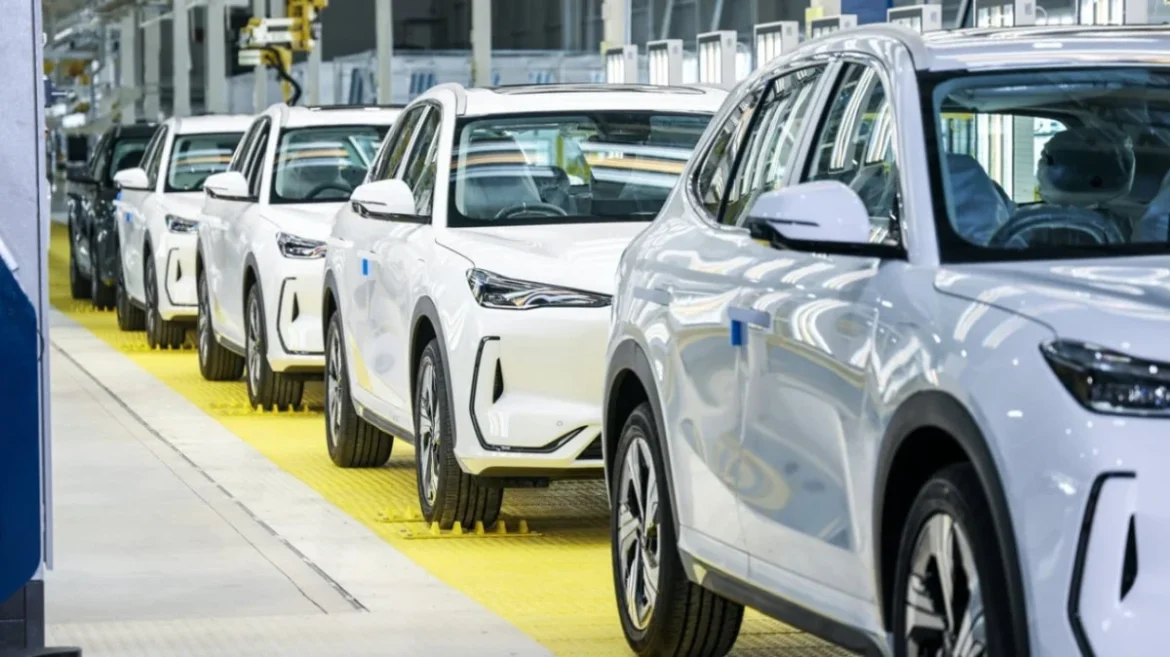
Kuala Lumpur, Malaysia – July 22, 2026 – The automotive landscape in Malaysia has once again demonstrated the enduring strength of its national car brands, Proton and Perodua, as they significantly expanded their market share during the first half of 2026. This robust performance has placed considerable pressure on the sales of foreign automotive marques within the country, solidifying the dominance of local manufacturers.
According to data released by the Malaysian Automotive Association (MAA), total vehicle sales in Malaysia from January to June 2026 reached an impressive 385,353 units. This figure represents a healthy increase of approximately 3 percent compared to the same period in the previous year, indicating a resilient and growing domestic market.
Proton and Perodua emerged as the primary drivers of this growth, collectively accounting for a substantial 256,304 units sold. This impressive volume translates to a commanding 67 percent share of the Malaysian automotive market for the first six months of 2026. This represents a notable uptick from the first half of 2025, when the combined sales of Proton and Perodua stood at 235,961 units, capturing 63 percent of the market. Over the span of just one year, the two national manufacturers have collectively boosted their sales by over 20,000 units and expanded their market share by four percentage points.
In stark contrast, the performance of non-national, or foreign, automotive brands has been less auspicious. Collectively, these international players registered sales of 129,049 units during the first half of 2026, a decrease that has seen their market share shrink to 33 percent. This marks a decline from the first half of 2025, when foreign brands sold 137,675 units, holding approximately 37 percent of the market. The data reveals a net decrease of over 8,600 units for foreign brands year-on-year.
This trend underscores a persistent shift in the Malaysian automotive market, increasingly favoring domestic manufacturers. For several years, Proton and Perodua have consistently maintained their leading positions, even as an increasing number of new international brands have entered the competitive Malaysian arena.
A Growing Trend of National Car Ascendancy
The MAA’s historical data further illustrates this growing dominance. Since 2024, the market share of non-national brands has been on a consistent downward trajectory. In 2024, Proton and Perodua together sold a total of 505,689 units, securing a significant 62 percent of the national vehicle sales. The year prior, 2023, saw an even stronger performance from the national carmakers, with their combined market share reaching an impressive 66.9 percent. In 2022, their market share stood at 65.1 percent, demonstrating a steady upward trend over the past few years.
The robust market position of Proton and Perodua can be attributed to several key factors. A primary contributor is their diversified product portfolio, which effectively caters to a wide spectrum of consumer needs and preferences. From entry-level compact cars designed for affordability and urban mobility to more robust SUVs built for families and adventure, both brands offer compelling options across various segments. Furthermore, their extensive sales and service networks, deeply embedded within the Malaysian infrastructure, provide accessibility and convenience to a broad customer base. Coupled with competitive pricing strategies tailored for the domestic market, these elements create a strong value proposition for Malaysian consumers.
Historical Context: The Rise of National Automotive Champions
The establishment of national car projects in Malaysia was a strategic initiative driven by the government’s vision to foster industrial development and technological self-sufficiency. Proton, the first Malaysian automotive manufacturer, was established in 1983 with the ambitious goal of creating a Malaysian-made car. Its initial models were often based on Japanese platforms, but the long-term aim was to develop indigenous capabilities. Perodua, founded in 1993, followed a similar trajectory, focusing initially on smaller, more affordable vehicles, often in collaboration with Daihatsu.
Over the decades, both companies have navigated various economic cycles, technological shifts, and ownership changes. Proton, in particular, underwent a significant transition in 2017 when Chinese automaker Geely acquired a significant stake, bringing with it new technology, management expertise, and access to global supply chains. This partnership has been widely credited with revitalizing Proton, leading to the development of more modern and competitive vehicles that have resonated well with consumers. Perodua, on the other hand, has maintained a close relationship with Daihatsu (and by extension, Toyota), leveraging their expertise in efficient and reliable small car manufacturing.
The success of these national car programs is not merely an economic achievement but also a source of national pride. The ability of Proton and Perodua to not only compete but to increasingly dominate their home market signifies a maturing automotive industry capable of meeting local demands effectively and efficiently.
Implications and Future Outlook
The sustained dominance of Proton and Perodua has several significant implications for the Malaysian automotive sector and the broader economy. Firstly, it indicates a strong consumer preference for locally manufactured vehicles, likely driven by factors such as perceived value, after-sales support, and nationalistic sentiment. This loyalty provides a stable foundation for the continued growth and innovation of these two key players.
Secondly, the strong performance of national brands contributes to job creation and economic development within Malaysia. A robust automotive industry supports a vast ecosystem of suppliers, manufacturers, and service providers, fostering technological advancement and skills development. The increased market share translates into higher production volumes, which in turn can lead to greater investment in research and development, further enhancing the competitiveness of Malaysian automotive products on both domestic and international stages.
However, the increasing pressure on foreign brands also signals a more challenging operating environment for international automakers in Malaysia. To remain competitive, these companies will need to adapt their strategies, potentially by introducing more compelling models at competitive price points, enhancing their after-sales service, or focusing on niche market segments where they might have a distinct advantage. The success of Proton and Perodua also sets a higher benchmark for product quality, innovation, and customer satisfaction, which will likely drive overall improvements across the entire Malaysian automotive market.
The MAA’s mid-year report serves as a clear indicator of the current dynamics at play. The first half of 2026 has reinforced the established narrative of national car superiority in Malaysia. As the year progresses, it will be crucial to monitor whether this trend continues and how foreign manufacturers respond to the intensifying competition. The ongoing success of Proton and Perodua not only solidifies their positions as the backbone of Malaysia’s automotive industry but also highlights the nation’s growing capability in producing vehicles that meet and exceed the expectations of its consumers.
The continued investment in technology, design, and manufacturing processes by Proton and Perodua, bolstered by strategic partnerships, suggests a future where these national champions are poised to further entrench their market leadership. Their ability to adapt to evolving consumer demands, embrace sustainable technologies, and maintain competitive pricing will be key determinants of their long-term success and their ability to potentially expand their reach beyond Malaysian shores. The automotive sector in Malaysia is clearly in a phase of robust national growth, with Proton and Perodua leading the charge with undeniable momentum.
