
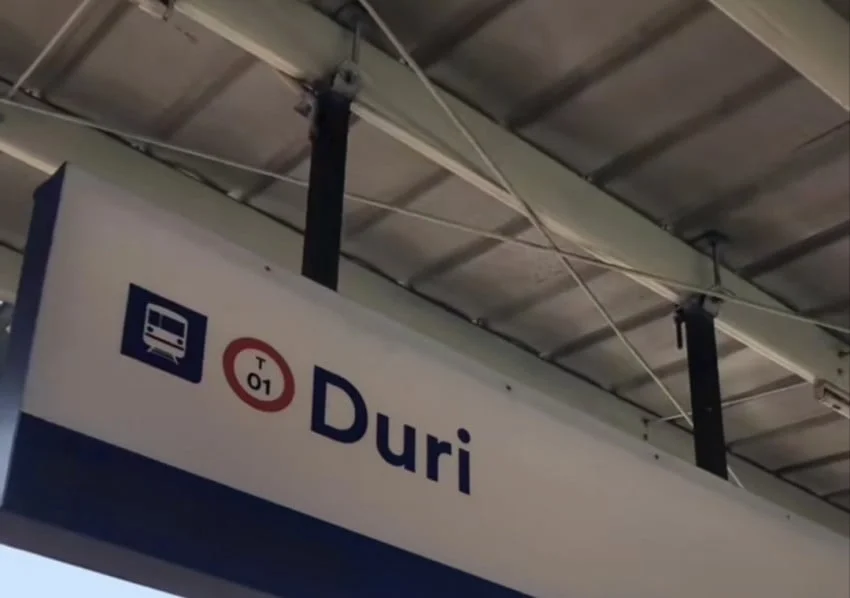
The ongoing expansion and modernization of Greater Jakarta’s integrated rail network have brought unprecedented passenger volumes to key transit hubs across the metropolis. In response to mounting congestion and critical infrastructure bottlenecks, PT Kereta Commuter Indonesia (KCI), widely known as KAI Commuter, has announced an ambitious capital works program focused on the comprehensive revitalization of two high-density transit facilities: Duri Station in West Jakarta and Cawang Station in East Jakarta. This infrastructure upgrade aims to fundamentally transform passenger flow dynamics, enhance safety margins, and accommodate the steady upward trajectory of commuter rail ridership throughout the Jabodetabek region.
The strategic decision to overhaul these specific stations follows years of sustained growth in daily commuter numbers, driven by residential expansion in Jakarta’s suburban peripheries and the systematic integration of various urban rail services, including the KRL Commuterline and the Soekarno-Hatta Airport Rail Link. By redesigning critical pedestrian paths, expanding concourse areas, and introducing dedicated pedestrian infrastructure, KAI Commuter seeks to alleviate the severe platform and concourse overcrowding that has long characterized peak-hour operations at these locations.
Main Facts and Scope of the Revitalization Project
The centerpiece of the revitalization initiative is a phased engineering and construction program designed to decouple passenger flows, reduce cross-platform conflicts, and expand overall station throughput. According to official disclosures from railway management, the capital expenditure program will target structural additions and spatial reorganizations tailored to the unique operational challenges of both Duri and Cawang stations.
At Duri Station—long recognized as one of the most critical and congested transit nodes in the network due to its convergence of commuter lines and airport rail services—the immediate priority is the construction of a new, high-capacity Skybridge or Jembatan Penyeberangan Orang (JPO). This structural addition is engineered to redirect and distribute passenger volumes before they reach the main platform areas, thereby mitigating the risk of platform congestion and improving safety compliance during peak operational windows.
VP Corporate Secretary of KAI Commuter, Karina Amanda, confirmed that the implementation strategy for Duri Station will be executed in carefully scheduled phases to minimize disruption to ongoing train operations. The inaugural phase of construction is scheduled to commence imminently with a formal groundbreaking ceremony. This initial phase focuses on establishing supplementary pedestrian access via a dedicated JPO extending toward the signal exit point in the direction of Tanah Abang.
Meanwhile, Cawang Station—situated along a vital east-west and north-south transit corridor—will undergo parallel infrastructural enhancements. While detailed engineering designs for Cawang are being finalized alongside Duri, the overarching objective for both stations remains identical: to future-proof the facilities against projected ridership increases over the coming decade, ensuring that passenger processing speeds match the high-frequency scheduling of the modern rail network.
High-Density Transit Realities: Ridership Data at Duri Station
To contextualize the urgency of the upcoming revitalization, operational metrics released by KAI Commuter underscore the immense daily pressure faced by Duri Station. As a primary transfer point for passengers moving between the Tangerang line, the central loop line, and airport services, Duri operates at near-maximum capacity during peak commuting hours.
Recent operational data reveals that the average volume of transit passengers processed at Duri Station alone reaches a staggering 87,066 individuals per day. A deeper analysis of these figures highlights significant variance between weekday commuter rushes and weekend travel patterns, placing distinct demands on station infrastructure:
- Weekday Average: On standard working days (Monday through Friday), passenger volume surges to approximately 93,412 transit users daily. This peak is heavily concentrated during the morning rush hour (06:00 to 09:00 WIB) and the evening exodus (17:00 to 20:00 WIB), when office workers and students from Tangerang and outer West Jakarta converge on the station to transfer toward central business districts like Sudirman, Manggarai, and Jakarta Kota.
- Weekend Average: Even during weekends, when commuter traffic typically experiences a general lull, Duri Station maintains a robust transit volume averaging 75,610 passengers per day. This sustained weekend traffic is largely attributed to leisure travel, localized commerce, and travelers utilizing the airport rail link connecting central Jakarta to Soekarno-Hatta International Airport.
These figures illustrate that Duri Station functions virtually without a dormant period, leaving engineering and maintenance teams with critically narrow windows to perform routine upkeep, let alone execute major structural expansions. Consequently, the planned phased construction approach is essential to maintaining daily service continuity while simultaneously building long-term capacity.
Chronology of Regional Rail Expansion and Infrastructure Pressures
The announcement of the Duri and Cawang revitalization projects does not occur in a vacuum; it represents the latest milestone in a continuous, multi-year evolution of the Greater Jakarta rail transit ecosystem. Understanding the timeline of network developments helps clarify why station overhauls have become an urgent operational necessity:
- Pre-2018 Era: KRL Commuterline operations transitioned into a modern, closed-gate, air-conditioned rapid transit system. However, infrastructure at historical legacy stations like Duri remained largely unchanged, resulting in structural bottlenecks as ridership grew exponentially following the implementation of the flat-fare subsidized tariff system (PSO).
- 2019–2021 Integration Phase: Duri Station gained heightened strategic importance with the inauguration and integration of the Soekarno-Hatta Airport Rail Link, transforming the station into a multi-modal interchange. This addition drastically increased foot traffic, as airline passengers mixed with daily suburban commuters within confined historical station boundaries.
- 2022–2024 Post-Pandemic Ridership Recovery: As public mobility restrictions were lifted following the COVID-19 pandemic, daily passenger volumes across the KRL network rapidly rebounded, surpassing 1.2 million daily system-wide passengers. Duri and Cawang stations frequently recorded critical density levels during peak hours, triggering localized crowd control protocols by station staff.
- Late 2026 Expansion Milestone: Demonstrating the continuous scaling of the rail network, KAI Commuter officially initiated the operational extension of the Soekarno-Hatta Airport Rail Line route all the way through to Bogor Station, which commenced operations on December 1, 2026. This major route extension further elevated the strategic role of connecting transit nodes, directly reinforcing the operational justification for upgrading Duri and Cawang facilities.
- Current Phase (November 2026 and Beyond): KAI Commuter formally announces the staged revitalization rollout, starting with the upcoming groundbreaking for the supplementary JPO at Duri Station to preemptively manage the surging cross-network traffic generated by newly integrated long-distance airport services.
Official Statements and Institutional Perspectives
Speaking on the operational imperatives driving the project, Karina Amanda emphasized that passenger safety, comfort, and service reliability remain the foundational pillars of KAI Commuter’s corporate strategy. The management team recognizes that simply increasing train frequency and procuring new rolling stock—such as the ongoing fleet modernization initiatives—will yield limited results if the physical stations lack the spatial capacity to safely discharge and ingest high volumes of passengers.
"So for the first one, Duri Station, this revitalization will be carried out in stages and in the near future there will be a groundbreaking for the beginning, namely for the construction of additional JPO access in the direction of the signal exit toward Tanah Abang," Karina explained during a briefing in Central Jakarta.
Transportation analysts and urban planning observers have largely welcomed the announcement, noting that horizontal and vertical integration of pedestrian pathways is critical for preventing platform-edge overcrowding. Urban transit advocates have long pointed out that narrow stairwells, limited gate lines, and restricted concourse spaces are the primary culprits behind passenger delays and safety hazards during peak operational windows. By constructing dedicated off-platform skybridges and expanding circulation zones, KAI Commuter is addressing the root structural causes of congestion rather than relying solely on temporary tactical crowd-management measures.
Broader Economic and Urban Mobility Implications
The revitalization of Duri and Cawang stations carries significant implications for the broader socio-economic landscape of Greater Jakarta. An efficient, high-capacity mass rapid transit system is widely recognized as a vital catalyst for urban productivity, reducing reliance on private motor vehicles, lowering carbon emissions, and mitigating the crippling economic losses associated with urban traffic congestion.
1. Enhanced Intermodal Connectivity
Duri and Cawang serve as critical linchpims in Jakarta’s multi-modal transit matrix. Duri connects west-bound commuter lines with airport rail services, while Cawang acts as a vital interchange point interacting with light rail transit (LRT Jabodebek) corridors and major TransJakarta bus rapid transit trunk routes. Upgrading these stations directly enhances the seamlessness of the passenger journey across different transport modes, reinforcing the Transit-Oriented Development (TOD) framework championed by regional and national governments.
2. Safety Risk Reduction
Overcrowded platforms present severe operational and safety risks, including accidental slips, falls onto active tracks, and prolonged dwell times that disrupt timetables across the entire network. The implementation of dedicated dispersion bridges and expanded ticketing concourses will directly lower these safety risks, providing a more orderly and secure environment for vulnerable demographics, including elderly passengers, pregnant women, and parents traveling with young children.
3. Economic Productivity and Regional Competitiveness
By reducing the time wasted by commuters navigating congested bottlenecks and queueing for access gates, the infrastructure upgrade indirectly boosts regional productivity. Commuters will experience more predictable travel times, reducing stress and improving punctuality for the workforce powering Jakarta’s economic engine.
Conclusion and Future Outlook
As the groundbreaking ceremony for the Duri Station revitalization approaches, KAI Commuter stands at a critical juncture in its institutional development. The concurrent modernization of Duri and Cawang stations reflects a proactive regulatory and operational response to the relentless growth of urban mobility demands in Jabodetabek.
While the construction phases will inevitably introduce temporary localized adjustments to passenger circulation, the long-term structural benefits far outweigh short-term inconveniences. Through strategic engineering interventions, expanded pedestrian infrastructure, and a steadfast commitment to passenger safety, KAI Commuter is laying the physical foundation for a world-class urban rail network capable of serving millions of daily commuters efficiently and sustainably for decades to come.
