
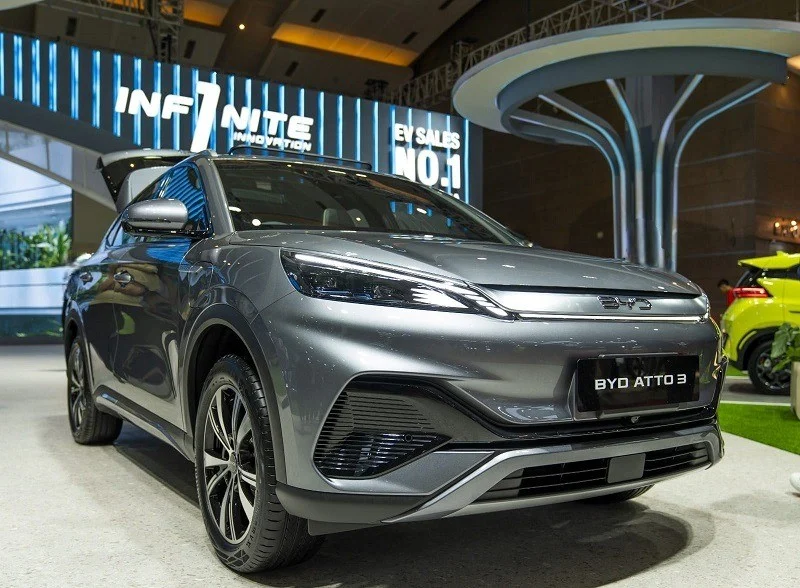
The Indonesian automotive industry, while experiencing a modest growth of approximately 3%, is witnessing a dramatic surge in the electric vehicle (EV) segment. Amidst this wave of electrification, Chinese manufacturer BYD has emerged as the undisputed leader, capturing a commanding market share of around 60% in the national EV landscape. This remarkable achievement underscores a significant shift in consumer preference and BYD’s strategic positioning within the burgeoning Indonesian EV market.
The sheer scale of BYD’s dominance was vividly illustrated during a recent prominent automotive exhibition. Far from being just another participant, BYD leveraged the platform to unequivocally assert its leadership. The company’s commanding presence at the event served as a potent symbol of its rapidly growing influence and its successful penetration into the Indonesian consumer consciousness. This dominant market share indicates that for every ten new electric cars hitting Indonesian roads, a substantial six are BYD vehicles, a testament to the brand’s widespread acceptance and appeal.
Sales Skyrocket: A Fivefold Increase in Early 2026
The data emerging from January 2026 provides concrete evidence of BYD’s explosive growth trajectory. In a single month, the company recorded sales of approximately 5,200 electric vehicles. This figure represents an astonishing increase, nearly fivefold, when compared to the same period in the preceding year. This exponential growth rate far outpaces the general market’s expansion and highlights the specific momentum building within the EV sector, with BYD at its forefront.
This impressive sales performance translates directly into market share. As of early 2026, BYD has solidified its position by capturing roughly 60% of the total EV market in Indonesia. This means that a significant majority of consumers opting for electric mobility solutions are choosing BYD models, a clear indication of the brand’s strong appeal and market penetration.
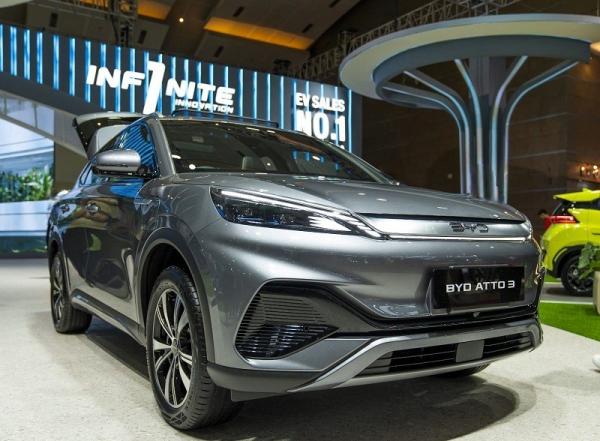
Consumer Confidence Fueled by Innovation and Value
Luther Panjaitan, Head of Public and Government Relations at PT BYD Motor Indonesia, attributed this remarkable achievement to the deep-seated trust consumers have placed in the quality and advanced technology offered by BYD vehicles. This confidence, he emphasized, has not materialized overnight. Instead, it is the result of BYD’s consistent efforts to deliver a compelling package that combines cutting-edge technological innovation, a diverse range of product offerings, and highly competitive pricing strategies.
BYD’s approach has been multifaceted. The company has invested heavily in research and development, leading to advancements in battery technology, such as their renowned Blade Battery. This technology not only enhances safety but also improves energy density and charging speeds, addressing key consumer concerns regarding EV adoption. Furthermore, BYD has strategically introduced a portfolio of vehicles catering to various segments of the Indonesian market, from compact urban commuters to larger family SUVs, ensuring that there is a BYD EV for a wide spectrum of consumer needs and preferences. This strategic product planning, coupled with aggressive yet accessible pricing, has proven to be a winning formula in a price-sensitive market like Indonesia.
Background Context: The Indonesian EV Landscape
Indonesia has set ambitious goals for electric vehicle adoption, driven by a desire to reduce reliance on fossil fuels, mitigate air pollution in its densely populated urban centers, and capitalize on the growing global trend towards sustainable transportation. The government has been actively implementing policies to encourage both the production and consumption of EVs, including tax incentives, import duty reductions, and the development of charging infrastructure.
The automotive market in Indonesia is one of the largest in Southeast Asia, with a long history of strong domestic sales and manufacturing. However, for decades, the market has been dominated by internal combustion engine (ICE) vehicles, primarily from Japanese manufacturers. The entry of new players, particularly from China, offering competitive EV options, has disrupted this established order. BYD’s rapid ascent is a clear indicator that these new entrants are not only competing but are also setting new benchmarks for success.

Timeline of BYD’s Indonesian Expansion (Inferred)
While specific detailed timelines for BYD’s market entry and growth in Indonesia are not provided in the original text, a logical progression can be inferred:
- Pre-Launch/Early Entry (Prior to 2023/2024): Initial market research, product development tailored for the Indonesian market, and potential establishment of distribution networks. This phase would involve understanding local consumer preferences, regulatory frameworks, and competitive landscapes.
- Official Launch and Initial Rollout (Likely 2023): Introduction of key EV models to the Indonesian market. This would involve marketing campaigns, dealership establishment, and initial sales efforts. Early sales figures during this period would have been modest, typical for any new entrant in a nascent market.
- Strategic Product and Pricing Adjustments (Late 2023/Early 2024): Based on initial market feedback and sales performance, BYD likely refined its product offerings, adjusted pricing strategies, and intensified marketing efforts. This period would have seen the introduction of models that resonated strongly with Indonesian consumers.
- Accelerated Growth and Dominance (Late 2024/Early 2025 and onwards): The period leading up to and including January 2026, as highlighted in the article, marks BYD’s most significant growth phase. This is when the company achieved its substantial market share, driven by strong consumer adoption and potentially favorable market conditions. The data from January 2026 clearly indicates that this growth is not a fleeting trend but a sustained surge.
Supporting Data and Technological Advancements
The success of BYD is intrinsically linked to its technological prowess, particularly in battery technology. The company’s "Blade Battery" has been a significant differentiator. This innovative battery design, which utilizes lithium iron phosphate (LFP) chemistry, is known for its enhanced safety features, longer lifespan, and improved thermal stability compared to traditional lithium-ion batteries. The article mentions a related development: BYD introducing its second-generation Blade Battery, capable of achieving a 97% charge in just 9 minutes. This dramatic reduction in charging time directly addresses one of the primary anxieties associated with EV adoption – range anxiety and charging inconvenience. If these advancements are being incorporated into the models sold in Indonesia, it would significantly bolster their attractiveness.
Furthermore, BYD’s integrated approach to EV manufacturing, from battery production to vehicle assembly, allows for greater cost control and quality assurance. This vertical integration likely contributes to their ability to offer competitive pricing without compromising on product quality, a crucial factor in the Indonesian market.
Official Responses and Future Outlook

While Mr. Panjaitan’s statement provides a clear indication of BYD’s internal perspective, the broader implications of BYD’s dominance are significant for the entire Indonesian automotive ecosystem.
- For Competitors: The success of BYD puts immense pressure on other automotive manufacturers, both local and international, to accelerate their EV strategies. Established players will need to innovate rapidly, adapt their pricing, and enhance their charging infrastructure support to remain competitive. This could lead to a more dynamic and competitive EV market overall.
- For Consumers: Increased competition and BYD’s aggressive pricing models are likely to translate into more affordable EV options for Indonesian consumers. This democratization of EV technology can accelerate adoption rates and bring the benefits of electric mobility to a wider population.
- For Government Policy: BYD’s strong performance validates the government’s push for EV adoption. It may also prompt a review of existing policies to ensure they continue to foster a healthy and competitive EV market, potentially focusing on aspects like local manufacturing, battery recycling, and the expansion of charging networks.
Broader Impact and Implications
BYD’s commanding presence in the Indonesian EV market signifies a tangible shift in global automotive manufacturing influence. The rapid rise of Chinese automotive brands, powered by technological innovation and competitive pricing, is reshaping automotive landscapes worldwide. Indonesia, as a major emerging market, serves as a critical battleground for these evolving dynamics.
The implications extend beyond mere sales figures. A significant presence of BYD vehicles on Indonesian roads could influence the development of local EV ecosystems, including charging infrastructure, maintenance services, and potentially, local battery production or assembly. The company’s commitment to consumer trust, as articulated by Mr. Panjaitan, suggests a long-term vision for its operations in Indonesia, aiming to build brand loyalty and sustainable growth.
Moreover, BYD’s proactive approach to addressing consumer concerns, such as charging speed and range anxiety, through technological advancements like the Blade Battery, sets a precedent for the industry. As the article hints at BYD’s preparations for the 2026 mudik (Idul Fitri travel period) with fast-charging posko (service posts), it demonstrates a commitment to supporting users during peak travel times, further solidifying their customer-centric approach. This strategic foresight is crucial for widespread EV adoption, especially in a country where long-distance travel is common.
In conclusion, BYD’s current market leadership in Indonesia’s electric vehicle segment is a remarkable achievement driven by a confluence of technological innovation, strategic product offerings, competitive pricing, and a deep understanding of consumer needs. As the Indonesian automotive industry continues its transition towards electrification, BYD’s dominant position is likely to shape the competitive landscape, accelerate the adoption of electric mobility, and contribute significantly to the nation’s sustainable transportation goals. The company’s continued investment and focus on customer experience will be key to maintaining this momentum in the years to come.
