
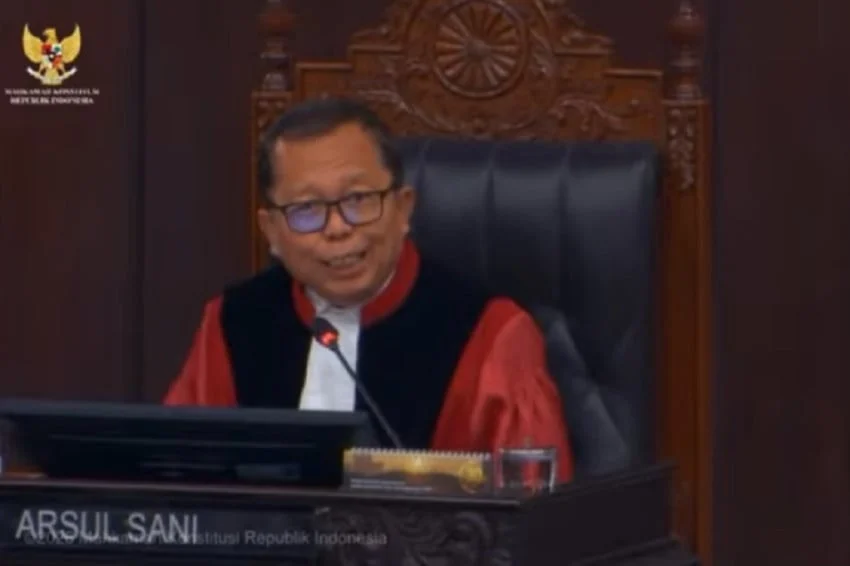
In a significant development within the chambers of the Constitutional Court (MK) of Indonesia, Justice Arsul Sani has formally requested that the Indonesian Ulema Council (MUI) provide a comprehensive clarification regarding the apparent discrepancy in the legal status assigned to electronic cigarettes, or "vape," compared to traditional combustible tobacco cigarettes. The inquiry, made during a high-stakes judicial review session, highlights a long-standing point of contention regarding how Islamic jurisprudence—specifically through MUI fatwas—navigates the complexities of modern nicotine delivery systems versus historical tobacco usage.
The Core of the Judicial Inquiry
The proceedings at the Constitutional Court centered on the regulatory framework governing tobacco and alternative nicotine products. During the testimony provided by the MUI, who appeared as a Related Party to the proceedings, Justice Arsul Sani scrutinized the consistency of the council’s religious rulings. Specifically, he pointed to Fatwa MUI Number 131 of 2026, which explicitly categorizes the use, production, and distribution of electronic cigarettes as haram (forbidden).
Contrasting this, Arsul Sani noted the existing stance on conventional cigarettes, which was established in the 2009 Fatwa. That ruling, while discouraging smoking, categorized the act within a nuanced spectrum—often interpreted as existing between makruh (disliked/discouraged) and haram (forbidden), depending on the circumstances, health impacts, and the specific school of thought applied.
"Vape is clearly declared haram, yet for conventional cigarettes, the status oscillates between makruh and haram. I request that the Related Party provide a deeper analysis as to why there is such a distinct difference in the legal approach between these two products," Arsul stated during the hearing on Thursday, November 26, 2026.
Historical Context of Tobacco Fatwas in Indonesia
To understand the weight of Arsul Sani’s request, one must look at the historical evolution of smoking-related rulings in Indonesia. For decades, the MUI has faced pressure to provide a definitive stance on tobacco. In 2009, the council reached a compromise, acknowledging the health risks associated with smoking while recognizing the socio-economic reality of the tobacco industry in the nation. The resulting fatwa was notably less prohibitive than international health standards might suggest, reflecting a pragmatic approach to the country’s massive tobacco economy.
However, the rise of vaping technology—often marketed as a "less harmful" alternative to traditional cigarettes—has forced religious authorities to re-evaluate their criteria for prohibition. By 2026, the MUI moved toward a more restrictive stance on electronic cigarettes, citing concerns over chemical additives, the potential for addiction among youth, and the lack of long-term safety data. The current legal challenge seeks to understand the "legal reasoning" (illat) behind the shift: Is the prohibition based on the method of consumption, the chemical components, or the perception of the product’s social impact?
Supporting Data and Public Health Concerns
The debate occurs against a backdrop of increasing health data regarding nicotine consumption in Indonesia. According to data from the Ministry of Health, the prevalence of smokers in Indonesia remains among the highest in the world, with a significant upward trend in the usage of e-cigarettes among adolescents and young adults.

Health experts argue that the chemical profiles of e-liquids, which often contain propylene glycol, vegetable glycerin, and synthetic flavorings, create a different health risk profile than the combustion of organic tobacco leaves. The MUI’s recent stance appears to be influenced by a precautionary principle, aiming to prevent the "normalization" of vaping before it becomes as deeply entrenched in the national culture as traditional cigarette smoking.
However, critics of the inconsistency argue that if the basis for prohibition is the harm caused to the human body—a core tenet of Islamic dietary and health laws—then the legal status of both products should theoretically align. If one is considered harmful enough to be prohibited, the logic follows that a similar, if not more severe, standard should be applied to traditional cigarettes, which are clinically proven to cause a range of chronic illnesses including cancer, heart disease, and respiratory failure.
Implications of the Legal Clarification
The Constitutional Court’s request for clarification carries significant implications for both public policy and religious jurisprudence. Should the MUI provide a detailed breakdown of their reasoning, it could serve as a foundational document for future legislative efforts.
- Regulatory Alignment: Legislators could use the MUI’s clarified stance to draft laws that either restrict or tax these products based on their "legal status" in the eyes of the public.
- Standardization: A clear, consistent definition would help the public and the industry understand the boundaries of what is acceptable, potentially reducing the gray areas that currently exist in the distribution and marketing of nicotine products.
- Public Perception: As religious rulings carry significant weight in Indonesian society, a detailed explanation from the MUI could sway public opinion significantly, potentially altering consumption patterns among the country’s Muslim majority.
The Path Forward: Judicial and Religious Interaction
The interaction between the Constitutional Court and the MUI signifies a rare moment where constitutional law and religious ethics intersect on the national stage. Justice Arsul Sani’s insistence on a "comprehensive explanation" reflects a desire for the rule of law to be supported by clear, rational, and consistent principles.
In the coming weeks, the MUI is expected to submit a formal response to the Court. Legal analysts suggest that the council will likely focus on the concept of dharar (harm) and how it is applied to new technologies. The council may argue that because vaping is a "new" product that does not have the same historical or economic dependency as tobacco, it is easier to impose a strict prohibition, whereas traditional cigarettes are treated with a "gradualist" approach due to their deep-seated integration into the nation’s socio-economic fabric.
Regardless of the rationale, the request by the Constitutional Court underscores the necessity for religious institutions to adapt their communication strategies in an era of rapidly evolving technology. As the digital and scientific landscape changes, the demand for transparency and logic in religious rulings grows.
Conclusion
The question posed by Justice Arsul Sani is not merely a technicality; it is a fundamental challenge to the consistency of how products are judged within the Indonesian legal and religious framework. As the nation grapples with the dual health crises of traditional tobacco usage and the emerging vaping trend, the forthcoming explanation from the MUI will serve as a critical reference point. It will determine whether Indonesia continues to treat these products as distinct categories or whether it will eventually move toward a unified regulatory and moral standard for all nicotine delivery systems.
For the millions of Indonesians impacted by these policies, the Court’s demand for clarity is a welcome step toward a more predictable and evidence-based regulatory environment. The outcome of these proceedings will undoubtedly set a precedent for how the state and religious authorities collaborate to address public health issues in the future.
