
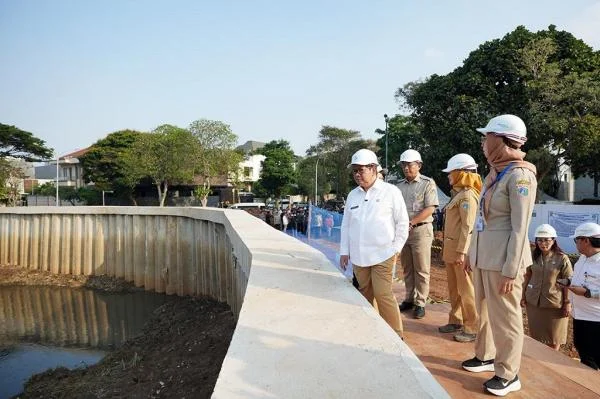
Jakarta Governor Pramono Anung conducted a direct inspection of the Kali Angke embankment construction project at the Permata Buana segment in Kembangan, West Jakarta, on Tuesday, November 3, 2026. The visit served as a critical milestone in the ongoing efforts by the Jakarta Provincial Government to mitigate the perennial flooding issues that have long plagued the residents of the West Jakarta region, specifically within the Kembangan Utara area.
The infrastructure project is a flagship component of the broader JakTirta Project, an ambitious strategic plan aimed at revamping the city’s water management systems to improve flood resilience. As the rainy season approaches and climate patterns become increasingly unpredictable, the acceleration of this project has become a top priority for the provincial administration.
The Geography of Vulnerability in Kembangan Utara
During his site visit, Governor Pramono Anung highlighted the unique topographical challenges that make the Permata Buana segment particularly susceptible to inundation. He noted that the area acts as a natural catchment basin, sitting at a lower elevation compared to the surrounding urban landscape.
"We recognize that this specific segment has historically been the most prone to prolonged flooding," Governor Pramono explained during his briefing on Thursday, November 5, 2026. "Because of the basin-like topography, water tends to accumulate here faster and stay longer, making it the last point to recede after heavy rainfall. Our engineering efforts are focused on breaking this cycle by reinforcing the riverbanks and optimizing water flow control."
The geographic reality of Kembangan Utara is that it serves as a drainage bottleneck. Without the structural intervention of the new embankment, the natural runoff from higher grounds inevitably converges in this low-lying area. The current project aims to contain these waters within the river channel, preventing the overflow that has historically disrupted local traffic, damaged property, and forced the temporary evacuation of residents.
Project Scope and Technical Specifications
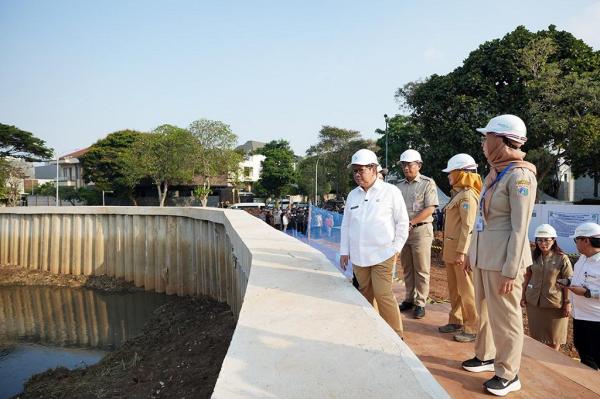
The Kali Angke embankment project is not a singular construction effort but a multi-segmented intervention designed to provide comprehensive protection along the river’s path. The total length of the embankment under this current phase spans approximately 2.057 kilometers. This stretch has been strategically divided into four distinct segments, each managed to ensure structural integrity and seamless connectivity.
"From the total length of 2.057 kilometers, which consists of four segments, I am pleased to report that we have reached 90 percent completion," the Governor stated. The progress represents a significant achievement for the public works department, which has navigated complex land management and logistical challenges to reach this stage.
The construction utilizes high-grade reinforced concrete and state-of-the-art sheet piling techniques to withstand the hydrostatic pressure of the river during peak flow. Beyond simply heightening the banks, the project incorporates integrated drainage outlets that allow water from the surrounding residential areas to be safely pumped or channeled into the main river stream, reducing the risk of localized flooding caused by surface water stagnation.
Contextualizing the JakTirta Project
The JakTirta Project represents a shift in how the Jakarta administration handles hydraulic infrastructure. Rather than relying on sporadic repairs, the government has adopted a proactive, basin-wide strategy. This approach acknowledges that Jakarta’s flooding is not caused by a single factor but by a combination of high-intensity rainfall, land subsidence, and an aging drainage network.
The Kali Angke intervention is part of a larger mandate to stabilize the riverbanks across the city. By securing the Permata Buana segment, the city is effectively tightening the "flood wall" that protects the densely populated western corridor of Jakarta. This is essential for the economic stability of the region, as the Kembangan district houses significant commercial hubs and vital transit infrastructure that cannot afford repeated shutdowns due to inundation.
Economic and Financial Implications
The progress of the Kali Angke project comes at a time when the Jakarta government is navigating complex financial landscapes. As previously reported, the administration has faced hurdles in securing traditional funding through regional bonds, with a proposed IDR 5.6 trillion bond issuance currently awaiting central government approval.

Despite these fiscal hurdles, Governor Pramono has maintained that critical infrastructure projects such as flood mitigation must continue uninterrupted. The administration is reportedly exploring alternative funding models, including public-private partnerships (PPP) and reallocating budgetary priorities to ensure that essential projects like the Permata Buana embankment are not stalled by administrative delays in external financing.
Economic analysts suggest that the cost of flood damage in Jakarta, which includes infrastructure repair, lost business days, and public health costs, far outweighs the investment in these preventive measures. By completing the final 10 percent of this project, the city anticipates a significant decrease in the economic burden placed on the local government and the residents of West Jakarta.
Community Impact and Future Outlook
For the residents of Kembangan Utara, the physical progress of the embankment offers a sense of relief. For years, the community has had to adjust their daily lives around the seasonal threat of floods, often moving belongings to higher floors or preparing for extended periods of isolation.
The successful implementation of this project is expected to enhance property values in the area and, more importantly, restore the sense of security for families who have lived under the threat of flooding for decades. The provincial government has also emphasized that the infrastructure is designed to be "future-proof," taking into account projected climate change impacts and potential increases in rainfall intensity over the next several decades.
Looking ahead, the Jakarta administration is expected to finalize the remaining 10 percent of the project by the end of the current fiscal year. Once completed, the government plans to conduct a comprehensive audit of the embankment’s performance during the upcoming peak monsoon season to ensure that the engineering specifications hold up under real-world stress tests.
Broader Urban Planning Challenges
The development at Kali Angke is merely one piece of a much larger puzzle in Jakarta’s urban evolution. As the city transitions toward its new role as a global economic center following the national capital relocation, the focus on "liveability" has intensified. Flood control is identified as the primary prerequisite for this transformation.

Furthermore, the government is looking to integrate these embankments with green zones and pedestrian pathways, where possible, to improve the aesthetic and environmental quality of the riverbanks. The goal is to move away from the "concrete jungle" approach and toward an integrated water-sensitive urban design.
Conclusion
The visit by Governor Pramono Anung to the Permata Buana segment serves as a testament to the administration’s focus on tangible, results-oriented governance. With 90 percent of the Kali Angke embankment project now complete, the citizens of West Jakarta are closer than ever to seeing a permanent solution to the recurring floods.
As the project enters its final phase, the spotlight remains on the Jakarta Provincial Government to maintain the pace of construction, ensure the quality of materials, and successfully manage the fiscal requirements of this critical infrastructure. The success of this endeavor will likely set the benchmark for similar flood mitigation projects across the capital, signaling a new era of proactive urban management in the face of environmental challenges.
The commitment shown by the provincial administration to the Kembangan area underscores a broader strategy to prioritize the safety and well-being of Jakarta’s residents, ensuring that even as the city grows and changes, its most vulnerable regions are protected by robust, modern, and reliable infrastructure.
