
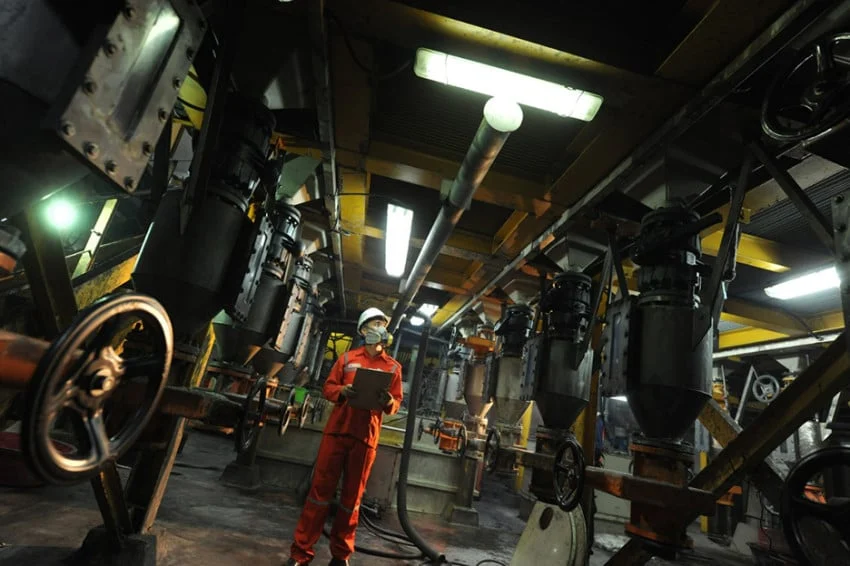
PT Aneka Tambang Tbk (ANTM), a prominent entity under the state-owned mining holding company MIND ID, is set to significantly expand its footprint in the downstream precious metals sector. The company has officially announced that its state-of-the-art gold refinery and manufacturing facility currently under construction in Gresik, East Java, is slated to commence full commercial operations by 2028. This strategic move is designed to fortify Indonesia’s domestic gold supply chain, reduce reliance on external refining capabilities, and consolidate Antam’s dominant position in the local investment-grade gold market.
Strategic Objectives and Capital Investment
The development of the Gresik refinery represents a cornerstone of Antam’s long-term business strategy. With an estimated capital expenditure of approximately Rp1.1 trillion, the project is being financed entirely by Antam, signaling the company’s commitment to maintaining 100% ownership of its critical downstream infrastructure.
During the recent Public Expose Live 2026, Arini Kasmira, Director of Finance and Risk Management at Antam, emphasized that the facility is designed to address the surging demand for gold as a primary investment vehicle among Indonesians. The plant is projected to boast a production capacity of approximately 30 to 40 tons of refined gold per annum. Beyond raw refining, the facility will integrate advanced manufacturing lines capable of producing roughly 5 million pieces of gold bars and commemorative coins annually, all maintaining a purity level of 99.99%.
Market Context and Industry Positioning
Antam currently holds a commanding market share of over 60% in the domestic Indonesian gold market. For decades, the company has served as the primary benchmark for gold purity and investment credibility within the country. However, the rise of digital gold platforms and increasing competition from private refineries have necessitated a shift in operations.
By localizing production in Gresik—a strategic industrial hub with robust logistics connectivity—Antam aims to shorten its supply chain. The proximity of the facility to major ports and industrial zones in East Java will facilitate more efficient distribution to the eastern and central regions of Indonesia, effectively countering logistics-related price volatility.
The decision to expand capacity is also a reaction to the global macroeconomic climate. With gold consistently serving as a hedge against inflation and currency fluctuations, domestic interest in physical gold ownership has seen a steady upward trajectory. Antam’s strategy is not merely to increase volume but to ensure that its "Logam Mulia" brand remains the preferred choice for retail and institutional investors by providing guaranteed liquidity and world-class certification.
A Chronology of Downstream Ambitions
The project in Gresik did not emerge in isolation. It is the culmination of a multi-year effort by the Indonesian government to mandate the downstream processing of mineral resources.
- 2020-2022: The Indonesian government accelerated policies requiring mineral-producing companies to build domestic refineries to add value before export. Antam began conducting feasibility studies for a new refinery to supplement its existing Pulogadung facility.
- 2023: Site selection for the Gresik facility was finalized, taking into account industrial infrastructure readiness and access to power and logistical networks.
- 2024-2025: Civil works and procurement of high-tech refining machinery commenced, with the company navigating complex environmental permitting and regulatory compliance.
- 2026: During the Public Expose, management confirmed the progress of the project, reaffirming the 2028 operational timeline as a realistic milestone amidst global supply chain normalization.
- 2028 (Projected): Commencement of commercial operations, marking a transition toward a higher-throughput manufacturing model.
Technical and Operational Implications
The new facility will employ sophisticated refining techniques, including chemical and electrolytic processes, to achieve the highest international standards of gold purity. By integrating manufacturing directly into the refinery site, Antam intends to eliminate the costs associated with transporting raw bullion to secondary facilities for stamping and packaging.
From an operational standpoint, this vertical integration is expected to optimize margins. By controlling the entire lifecycle—from the receipt of doré bars to the finished, assay-certified gold product—Antam can exert tighter control over quality assurance. This is particularly vital in the context of the London Bullion Market Association (LBMA) standards, which Antam strives to uphold to ensure its products remain globally fungible.
Economic Impact and National Significance
The broader implications of the Gresik project extend beyond the balance sheet of PT Aneka Tambang. For the Indonesian economy, the project serves as a key pillar in the government’s industrialization agenda.
- Job Creation: The construction and subsequent operation of the facility will generate significant employment opportunities, both directly for chemical engineers, refinery technicians, and administrative staff, and indirectly through the support services industry in East Java.
- Foreign Exchange Reserves: By producing more refined gold domestically, Indonesia reduces the outflow of foreign currency that would otherwise be spent on importing refined bullion to meet domestic manufacturing needs.
- Gold Market Stabilization: A stable and high-capacity supply of domestic gold helps in stabilizing local prices. When local demand is met by domestic production, the market is less susceptible to shocks in global logistics or sudden changes in international gold import policies.
Managing Risks and Future Challenges
Despite the optimistic outlook, the project faces inherent risks. Arini Kasmira noted that risk management remains a top priority. Volatility in gold prices, fluctuating energy costs required for the refining process, and the ongoing need for a steady supply of raw doré gold from mines are factors that could impact the refinery’s performance.
Furthermore, as the market becomes more sophisticated, Antam must continue to innovate in its product offerings. The integration of security features in gold bars—such as QR-coded assay cards or specialized laser engravings—will be necessary to combat counterfeiting and maintain investor trust. The company’s focus on "strengthening the product mix" suggests that Antam is preparing to introduce more diverse denominations and collectible series to capture a broader demographic of investors, including the younger, tech-savvy generation.
Official Stance and Stakeholder Confidence
During the recent briefing, the board of directors underscored that Antam remains committed to transparency and operational excellence. The investment of Rp1.1 trillion is viewed as a calculated long-term allocation that will yield returns through market dominance and economies of scale.
Analysts have observed that the company’s strong cash position and the backing of the MIND ID holding company provide a solid foundation for such capital-intensive projects. Investors and stakeholders are closely watching the construction progress, as the timely completion of the Gresik plant will be a critical performance indicator for the executive leadership over the next 24 months.
Conclusion: A New Era for Indonesian Precious Metals
The launch of the Gresik refinery in 2028 will mark a definitive evolution for PT Aneka Tambang Tbk. By transitioning from a traditional miner to a modernized, high-capacity manufacturer, Antam is positioning itself to be a formidable player in the global precious metals landscape. As the facility moves from the blueprints to physical reality, the focus shifts to ensuring that the project adheres to the highest environmental, social, and governance (ESG) standards, which are increasingly critical for state-owned enterprises in the modern investment era.
Ultimately, the Gresik project is more than just a factory; it is a symbol of Indonesia’s intent to own the value chain of its natural resources. As the 2028 deadline approaches, the industry expects Antam to continue providing updates on technical milestones, ensuring that the refinery not only meets the projected production targets but also sets a new standard for efficiency and sustainability in the Southeast Asian gold market. With a 60% market share and a clear mandate to expand, Antam remains the heartbeat of the Indonesian gold industry, and the Gresik facility is the instrument that will keep that heart beating for years to come.
