
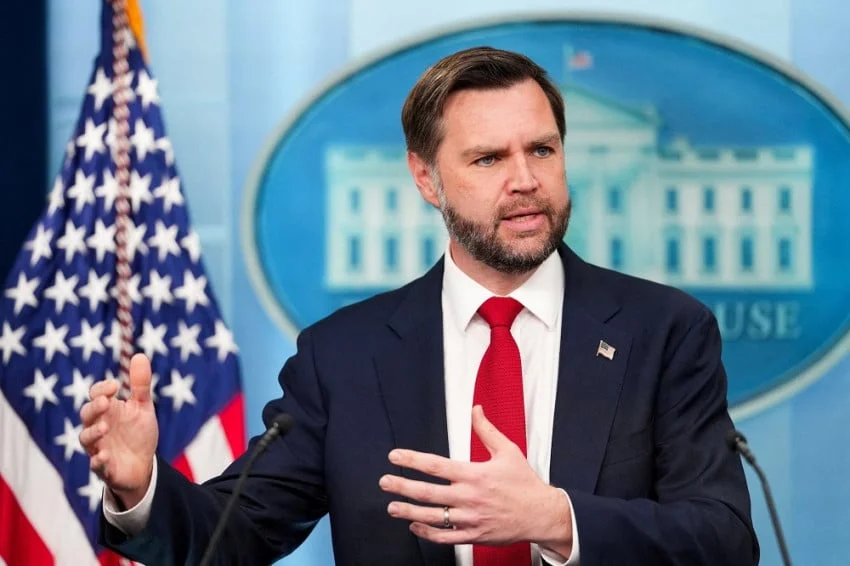
The political trajectory of Vice President JD Vance, once considered the heir apparent to the Trumpian populist movement, has encountered significant turbulence following a series of devastating setbacks for the Republican Party in the recent midterm elections. As the dust settles on a cycle that saw the Grand Old Party (GOP) suffer profound losses in both legislative and gubernatorial contests, influential donors, party strategists, and internal allies have begun to openly question the viability of a Vance presidential bid in 2028. This shift in sentiment, reported extensively by outlets such as The Wall Street Journal, suggests that the perceived mandate of the current administration’s ideological platform is under severe scrutiny.
For Vance, the path to the White House was once viewed as a natural progression of his role as the standard-bearer for the “America First” agenda. However, the electoral reality has painted a different picture. With the loss of seven pivotal Senate seats—including the seat previously held by Vance in Ohio—and the erosion of Republican dominance in traditional strongholds like Georgia and Texas, the political capital once enjoyed by the administration has undergone a rapid devaluation.
The Erosion of Donor Confidence
The most immediate and tangible consequence of the midterm disaster has been the alienation of the Republican donor class. In the high-stakes world of presidential campaigning, financial backing is the lifeblood of any serious bid. Within 24 hours of the final vote tallies, senior fundraisers in financial hubs like New York and Chicago reported an influx of calls from major donors expressing deep skepticism regarding Vance’s future electoral prospects.
These donors, many of whom previously supported the Trump-Vance ticket, are now recalibrating their investments. There is a palpable concern that the current administration’s policies, coupled with the electoral losses, have made the party’s platform appear increasingly out of step with independent voters. Some high-net-worth contributors have already begun to pivot their attention toward alternative figures, most notably Florida Governor Ron DeSantis and other potential contenders who are perceived as being more capable of navigating a post-Trump landscape.
The core of this anxiety lies in the “Trump association.” While Vance was selected for his alignment with the former president’s populist base, that same alignment is now seen by some institutional donors as a political liability. The fear is that the electorate is experiencing a form of “Trump fatigue,” and that anyone tethered too closely to the incumbent administration’s baggage will struggle to build the necessary bridge to the moderate and suburban voters required to win a general election.
A Chronology of Electoral Setbacks
To understand the severity of the situation, one must look at the timeline of the 2024-2025 electoral cycle. The midterm elections served as a referendum on the administration’s performance, and the results were unequivocal.
- Late 2024: As the campaign season heated up, polling indicated a narrowing gap in key battleground states. Despite efforts to frame the election around economic stability and national security, the Republican message struggled to gain traction among demographics that had previously shifted toward the GOP.
- Election Day (The Midterm Shock): The results on Tuesday night sent shockwaves through the Republican National Committee (RNC). The loss of the Ohio Senate seat was particularly stinging, as it was a state that had recently trended red. Simultaneously, the loss of gubernatorial races in Texas and Georgia signaled a breakdown in the party’s traditional coalition-building strategy.
- Post-Election Realignment: In the days following the defeat, internal deliberations within the Vance camp became characterized by caution. Sources close to the Vice President have indicated that he has not yet made a formal decision regarding a 2028 run, suggesting that he is currently in a period of intense self-reflection and political assessment.
The Impact of Foreign Policy and the Iran Conflict
One of the central pillars of the current administration’s defense regarding the electoral loss is the ongoing geopolitical conflict involving Iran. Vice President Vance has consistently argued that the domestic fallout of the midterms cannot be divorced from the global stage, specifically citing the complications arising from the administration’s stance on the Iranian conflict.
The argument presented by the Vance camp is that the conflict created a state of national uncertainty, which in turn suppressed voter turnout among the Republican base and allowed Democrats to frame the administration as being preoccupied with international crises at the expense of domestic issues. However, political analysts argue that this rationale is unlikely to satisfy a donor class focused on electability. While foreign policy is a significant factor in presidential politics, voters in midterm elections historically prioritize economic conditions, healthcare, and local governance. By emphasizing the conflict with Iran as a primary driver of the GOP’s defeat, Vance risks appearing disconnected from the everyday concerns of the American public, potentially further alienating the very voters he needs to attract.
Statistical Context and Electoral Implications
The mathematical reality facing the Republican Party is sobering. To regain the White House in 2028, the party must reconcile its internal divisions. The loss of seven Senate seats is not merely a numerical deficit; it represents a loss of institutional power that makes it significantly harder to pass legislation, confirm judicial appointments, and maintain the party’s national profile.
Data from the recent cycle indicates that the GOP’s support among suburban women and independent voters—key demographics that decided the last two presidential elections—has continued to decline. If Vance, as the face of the current administration, cannot demonstrate a strategy to recapture these voters, his path to the nomination will be fraught with obstacles. Furthermore, the emergence of alternative candidates who offer a different brand of conservatism—one less focused on the specific grievances of the 2024 campaign—poses a direct threat to his ability to consolidate the party base.
The Path Forward: Challenges and Speculation
As the party looks toward the 2028 cycle, the debate over its ideological direction will likely intensify. There are two primary schools of thought within the GOP:
- The Continuity Wing: This faction believes that the party must double down on the populist, anti-establishment platform that brought Trump and Vance to power, arguing that the midterm losses were an anomaly caused by external factors (such as the Iran conflict) rather than an inherent flaw in the platform itself.
- The Reformist Wing: This faction, which includes many of the donors now distancing themselves from Vance, advocates for a pivot toward a more traditional, governing-focused conservatism that emphasizes economic growth, individual liberty, and a more tempered approach to cultural politics.
For JD Vance, the next eighteen months will be critical. He must decide whether to position himself as a bridge between these two factions or as the definitive champion of the former. Both strategies carry significant risks. By attempting to bridge the divide, he may satisfy neither; by choosing a side, he risks alienating a large portion of the party electorate.
Conclusion
The ambition of JD Vance to ascend to the presidency in 2028, once viewed as a trajectory of inevitability, is now subject to the harsh realities of electoral politics and financial pragmatism. The loss of donor confidence, the erosion of the party’s legislative power, and the ongoing debate over the efficacy of his ideological platform have created a climate of uncertainty.
While the Vice President remains a prominent voice within the party, his ability to successfully pivot to a national candidacy will depend on his capacity to address the concerns of a party that is currently in the midst of a profound identity crisis. Whether the current administration can recover its standing, or whether the GOP will seek a new direction for 2028, remains the central question of the coming years. For now, the narrative surrounding Vance is one of reflection and repositioning, as he and his team navigate the complex political fallout of an election cycle that has fundamentally altered the landscape of American conservatism.
