
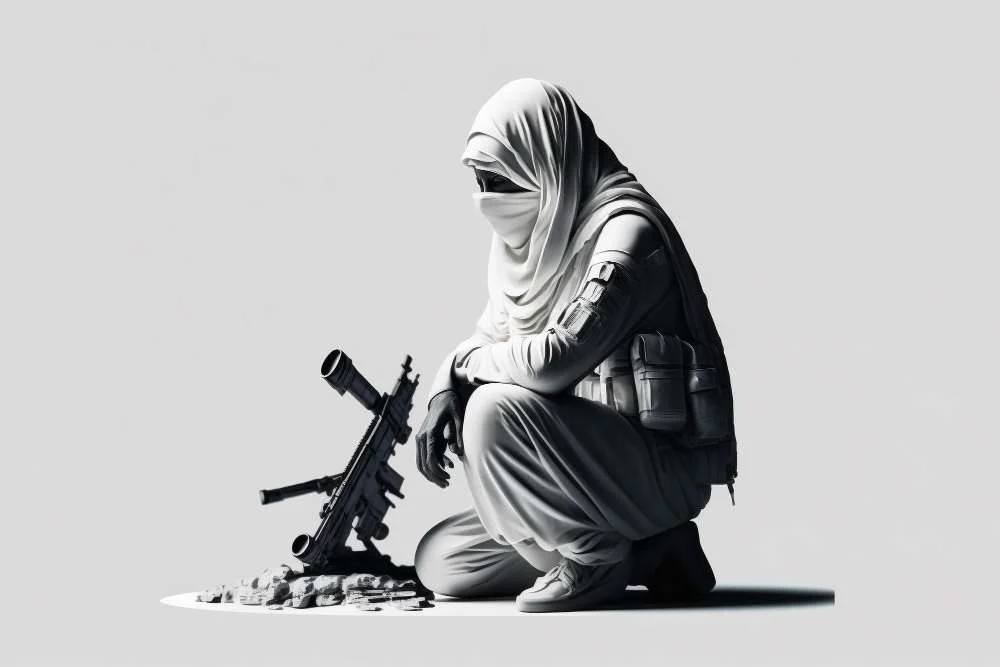
The landscape of global and domestic terrorism has undergone a profound transformation, moving away from a male-dominated operational structure toward a complex, inclusive model that increasingly leverages female participants. Once confined to domestic or supportive roles—such as managing households or providing logistical domestic care for male combatants—women have gradually emerged as central actors in recruitment, propaganda, financing, and direct kinetic operations, including suicide bombings. This shift challenges traditional security paradigms that have historically viewed women solely through the lens of victimhood, ignoring the multifaceted reality of radicalization, agency, and ideological conviction.
The Case of Dian Yulia Novi: A Turning Point in Indonesian Extremism
The arrest of Dian Yulia Novi in December 2016 serves as a definitive case study in this evolution. Captured by the Indonesian National Police just one day before a planned suicide attack against the Presidential Palace in Jakarta, the incident marked a departure from previous intelligence assessments. Dian, a former migrant worker, was not a coerced participant acting under duress; rather, she was a product of a sophisticated, digitally-facilitated recruitment pipeline.
Her trajectory began far from the centers of militant activity. While working abroad, she turned to social media to navigate personal crises and seek religious identity. In these digital echo chambers, she encountered propaganda disseminated by ISIS and content authored by influential extremist figures such as Aman Abdurrahman. Upon returning to Indonesia, her digital connections transitioned into physical ones, leading her into the heart of a terror cell. The subsequent conviction of Dian, who was sentenced to seven and a half years in prison, highlighted the efficacy of online indoctrination combined with interpersonal networking.
Chronology of Evolving Roles
The involvement of women in the Indonesian extremist landscape has followed a non-linear progression, closely linked to the global expansion of the Islamic State (ISIS) and technological advancements in communication.

- Pre-2010s: Women were primarily peripheral, acting as spouses to male fighters. Their primary contribution was the maintenance of the "jihadi household" and the socialization of children into the movement.
- 2014–2016: The rise of the ISIS caliphate catalyzed a shift. As the conflict in Syria intensified, propaganda specifically targeting women emerged, emphasizing the "virtue" of the hijrah (migration) and the necessity of female participation in the absence of sufficient male fighters.
- December 2016: The attempted attack by Dian Yulia Novi and Ika Puspitasari underscored that female militants were now considered viable assets for "amaliyah" (operations).
- May 2018: The Surabaya and Sidoarjo church bombings represented the most extreme manifestation of this evolution. The use of entire family units, including mothers and children, as suicide bombers, signaled a radicalization of the family structure itself, turning private domestic spaces into nurseries for militancy.
Analyzing the Mechanics of Radicalization
Research from institutions such as the Institute for Policy Analysis of Conflict (IPAC) and academic studies by scholars like Nava Nuraniyah suggest that the radicalization of women is rarely the result of a single factor. Instead, it is a confluence of personal, social, and ideological pressures.
For many women, particularly those working as migrant laborers or those living in socially isolated conditions, extremist organizations offer a sense of agency and belonging. The "community" found online provides a mechanism for identity formation that is often lacking in their physical environment. This sense of belonging is then fortified by ideological narratives that frame the current geopolitical climate as an existential threat to their faith, effectively creating a moral imperative for participation in violence.
Furthermore, the influence of extremist leaders cannot be understated. Bahrun Naim, a prominent Indonesian militant, played a significant role in legitimizing female participation. In 2016, his public assertion that participation in jihad becomes an obligation for women when men are unable or unwilling to fight provided the theological justification needed to mobilize women for combat roles. This shifted the internal perception of women from "supporters" to "equal combatants."
Data and Behavioral Patterns
The shift toward familial involvement in terrorism, as observed in the 2018 Surabaya attacks, requires a shift in counter-terrorism strategy. Kirsten E. Schulze’s analysis of these events emphasizes that the family unit has become a primary vehicle for indoctrination. When an entire family is radicalized, the home becomes a closed system of information, making intervention by external authorities or de-radicalization programs significantly more difficult.
According to the United Nations Office on Drugs and Crime (UNODC), the criminal justice response to this phenomenon is often hampered by gender stereotypes. Prosecutors and investigators are frequently prone to viewing female suspects as "passive victims" or "brainwashed spouses," which can lead to inadequate sentencing or missed opportunities for deradicalization. Conversely, treating all female suspects as hardened militants without considering the potential for coercion or exploitation risks neglecting the underlying sociological factors that enabled their recruitment in the first place.

Official Responses and Security Implications
The Indonesian government, through the National Counter-Terrorism Agency (BNPT) and the Special Detachment 88 (Densus 88), has had to recalibrate its approach. The traditional focus on tracking male-dominated cells is no longer sufficient. Modern counter-terrorism must account for:
- Digital Literacy and Monitoring: Since the primary recruitment channel is social media, tracking and countering propaganda in real-time is critical.
- Community-Based Intervention: Recognizing that the family is a unit of radicalization, outreach programs must involve families, women’s groups, and educational institutions to identify signs of extreme isolation or ideological shift.
- Gender-Sensitive Legal Frameworks: Enhancing the ability of the judiciary to distinguish between coerced participation and active, ideologically-driven agency is essential for both prosecution and effective rehabilitation.
Broader Societal Impact
The integration of women into terror networks has fundamentally altered the threat landscape in Indonesia. It complicates law enforcement intelligence, as women are statistically less likely to trigger suspicion compared to men in many public environments. Moreover, the utilization of children in these operations—as seen in the 2018 attacks—represents a grave violation of human rights and poses a long-term challenge for the psychological rehabilitation of the next generation.
The transition of women from the "behind-the-scenes" support staff to the "front lines" of terrorism is a trend that transcends national borders. It is a strategic pivot by extremist organizations to maximize their operational capacity and exploit the gendered blind spots of state security apparatuses.
Conclusion
Understanding the trajectory of women in terrorism requires moving beyond the binary of "victim versus perpetrator." While many women are undoubtedly exploited by the patriarchal structures of extremist groups, others are active agents who find purpose, identity, and ideological validation within these networks.
The process of radicalization is long, multi-layered, and deeply personal. It begins with a vulnerability—whether social, economic, or psychological—and is nurtured by a deliberate, organized effort to weaponize that vulnerability. To effectively counter this, policy and research must shift toward a more nuanced understanding of the individual human experience within these networks. By dissecting the intersection of propaganda, personal relationships, and organizational strategy, authorities can better craft interventions that focus on prevention rather than merely reaction. The future of counter-terrorism depends on the ability to see the human being behind the ideology, recognizing that the battle against extremism is not just fought on the battlefield, but in the digital spaces and private homes where radicalization takes root.
