
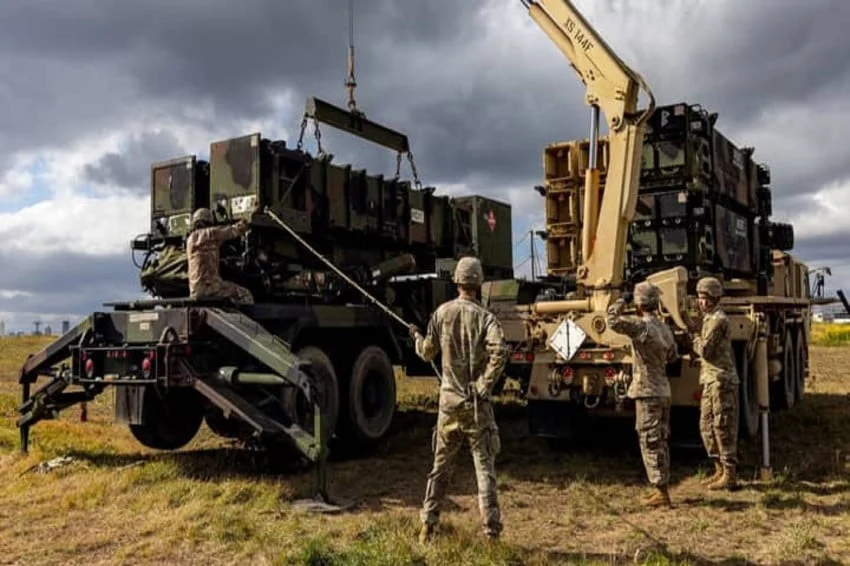
The Islamic Revolutionary Guard Corps (IRGC) of Iran announced on Sunday, November 22, 2026, that it conducted a coordinated offensive involving ballistic missiles and unmanned aerial vehicles (UAVs) against United States military installations in Bahrain. According to official statements released by the state-run Islamic Republic News Agency (IRNA), the strikes specifically targeted radar systems associated with Patriot missile batteries stationed at the Al-Riffa and Awali bases. Tehran characterized the operation as a direct retaliatory measure following what it described as persistent provocations and the violation of its sovereign airspace by American military assets.
Chronology of Escalation and Initial Hostilities
The sequence of events leading to this kinetic engagement began late Saturday evening. According to the IRGC’s official communique, the operation was prompted by the unauthorized entry of two American aircraft—identified by the IRGC as an MQ-1 Predator and an MQ-9 Reaper drone—into Iranian airspace. Tehran has long maintained that its sovereign territory is a "red line," and the military command asserted that the breach necessitated a decisive response to safeguard national security.
Following the alleged incursion, the IRGC launched a multi-vector strike package aimed at neutralizing the specific radar components of the Patriot defense network. By targeting the sensory array of these systems, the Iranian forces aimed to demonstrate their capability to degrade the sophisticated air defense umbrella that Washington has meticulously constructed across the Persian Gulf to protect both its personnel and its regional allies.
Bahrain’s Official Response and Discrepancies in Reporting
While the IRGC claimed success in striking US military targets, the narrative provided by the Bahraini government offers a contrasting perspective. The Bahraini Ministry of Interior issued a statement shortly after the incident, characterizing the event not as a surgical military strike, but as an act of "vile aggression" directed toward a civilian industrial facility.
According to Manama, the projectile impact triggered a significant fire at an industrial site. While the Ministry confirmed that the incident resulted in substantial material damage to the infrastructure, it explicitly stated that no casualties were reported. The discrepancy between the IRGC’s focus on military radar arrays and Bahrain’s report of an industrial site strike suggests a possible tactical divergence or a calculated move by Tehran to pressure regional partners who host US infrastructure.
The Strategic Significance of the Patriot Missile System
The Patriot (Phased Array Tracking Radar for Intercept on Target) system is the cornerstone of the United States’ regional defense strategy in the Middle East. Designed to intercept tactical ballistic missiles, cruise missiles, and advanced aircraft, the system is vital for protecting high-value assets.
In the Persian Gulf, the Patriot batteries serve as a deterrent against Iranian long-range strike capabilities. By specifically targeting the radar components, the IRGC is signaling an evolution in its electronic warfare and precision-strike doctrine. Should these radar systems be neutralized, it would leave US naval vessels and regional ground bases significantly more vulnerable to subsequent saturation attacks. The cost of maintaining these systems is immense, and the psychological impact of their vulnerability could potentially alter the security architecture of the Gulf states, which have historically relied on the "umbrella" of American military protection.
Regional Geopolitical Context
The relationship between Iran and the Gulf Cooperation Council (GCC) states has been increasingly strained. This incident follows a period of heightened diplomatic tension. Earlier in the year, former Qatari leadership expressed public frustration regarding the perceived transactional nature of US involvement in the region, noting that Washington’s engagement with Gulf nations often fluctuates based on its own domestic energy requirements.
This sense of abandonment or shifting priorities has left a power vacuum that regional actors are now maneuvering to fill. Iran’s decision to strike Bahrain, a key strategic partner of the United States and home to the US Navy’s Fifth Fleet, represents a significant escalation. It serves as a warning to other nations in the region that hosting foreign military assets will no longer be viewed by Tehran as a passive policy choice, but as an active alignment against Iranian interests.
Analysis of Military Implications
The use of a combined drone and missile strike highlights the maturation of Iran’s asymmetric warfare capabilities. By utilizing "swarm" or coordinated attack patterns, the IRGC is attempting to overwhelm traditional air defense sensors. The MQ-1 and MQ-9 drones mentioned in the report are central to US intelligence, surveillance, and reconnaissance (ISR) operations. If the US military remains silent regarding the loss of these assets, it may indicate a desire to avoid a public admission of failure or a potential desire to prevent an immediate cycle of tit-for-tat escalation.
Military analysts suggest that this event could force a reassessment of the "defensive posture" currently employed by the US Central Command (CENTCOM). If Patriot radars are susceptible to precision targeting, the US may need to deploy additional electronic jamming capabilities or augment its ground-based defenses with short-range air defense (SHORAD) systems to protect the sensors themselves. Furthermore, the incident creates a difficult diplomatic dilemma for Bahrain, which must now balance its security alliance with the United States against the reality of being a frontline state in a direct conflict with its neighbor across the Gulf.
Broader Economic and Global Impacts
The Persian Gulf remains the world’s most critical maritime corridor for energy exports. Any direct military confrontation between Iran and the United States in this theater carries an inherent risk of disrupting the global energy supply chain. The Strait of Hormuz, located adjacent to these conflict zones, is a chokepoint through which approximately 20% of the world’s petroleum passes.
Market reactions are expected to be volatile as investors assess the duration and scope of the engagement. If the conflict remains localized to specific radar installations, the impact may be limited; however, should the strikes expand to include oil infrastructure or tanker traffic, the global economic ripple effects could be severe. Insurance premiums for shipping in the region have already begun to climb in response to the increased risk of regional instability.
Future Outlook and De-escalation Challenges
As of late Sunday, the United States Department of Defense had not released a formal statement confirming or denying the claims made by the IRGC. This silence is common in the immediate aftermath of such incidents, as intelligence agencies scramble to verify the extent of the damage and assess the tactical success of the Iranian operation.
The international community is now looking for signals of restraint. Diplomatic channels, often mediated by third-party nations in the region, will likely be working overtime to prevent a wider conflagration. The core issue remains the definition of "sovereign airspace" and the rules of engagement for drone operations in international waters versus territorial zones. Without a clear deconfliction mechanism that both the US and Iran recognize, the risk of accidental or intentional escalation remains high.
For the IRGC, this operation is a demonstration of strength intended for both domestic and international audiences. By asserting that they have successfully challenged the American military presence, they are reinforcing their narrative of regional resistance. For the United States, the challenge lies in maintaining a credible deterrent without being dragged into a protracted conflict that could jeopardize its broader strategic pivot toward other global theaters.
The situation remains fluid. Further developments are expected as satellite imagery and additional intelligence reports provide a clearer picture of the damage at the Al-Riffa and Awali sites. For now, the region waits to see if this incident will be categorized as a contained skirmish or the beginning of a sustained period of kinetic hostility in the Middle East.
