
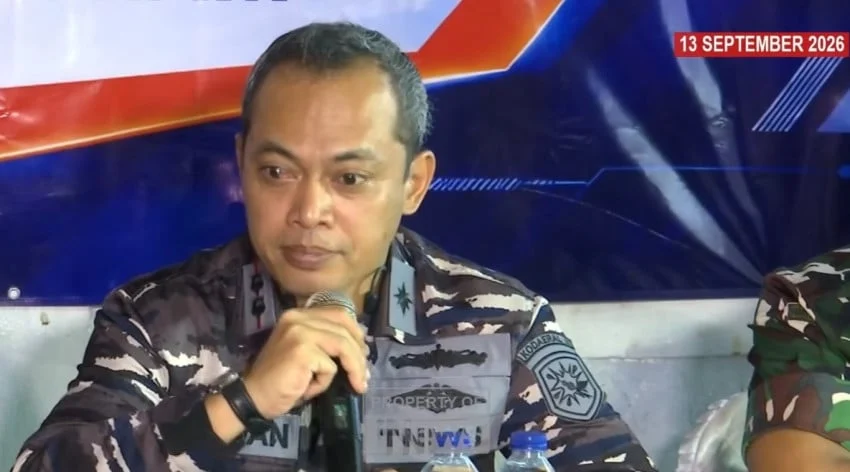
The ongoing search and rescue mission for five journalists and three vessel crew members who went missing in the Sunda Strait encountered significant setbacks on Sunday, September 13, 2026, as severe weather conditions grounded vital aerial assets. While maritime and land teams continue to scour the volatile waters and coastline, the inability to deploy support helicopters highlights the persistent environmental hazards that complicate emergency responses in one of Indonesia’s busiest and most unpredictable maritime corridors.
The incident has triggered a massive, multi-agency search operation now entering its critical sixth day. As rescue coordinators reassess their strategies, the reliance on specialized naval vessels and local authorities remains paramount to locating the missing individuals amidst challenging meteorological and oceanographic conditions.
Current Status of the Search and Rescue Operation
Speaking at a press conference held at the Carita Search and Rescue (SAR) Post on Sunday, Commander of the Banten Naval Base (Danlanal), Lieutenant Colonel (Navy) Wawan Subagyo Mardani, provided a candid update regarding the deployment of aerial resources. He confirmed that while reconnaissance and medical evacuation helicopters have been thoroughly prepped and positioned for immediate deployment, persistent inclement weather has rendered flights unsafe.
Helicopters remain constrained by adverse weather conditions, Lieutenant Colonel Wawan explained to members of the press. He emphasized that although the aircraft cannot take off at present, the flight crews and support personnel remain on high alert at their designated positions, ready to launch the moment visibility and wind speeds improve.
The integration of aerial surveillance is considered a crucial component of the broader SAR strategy, offering a wide-angle perspective of the Sunda Strait’s complex archipelago, turbulent currents, and remote shorelines. Rescue coordinators stress that air support will be deployed instantaneously once meteorological reports indicate a safe window for flight operations. Coordination between maritime units and aerial teams remains airtight, ensuring that no time is lost when the weather clears.
Chronology of the Disappearance and Initial Response
The tragic sequence of events began days prior when a vessel carrying a delegation of media personnel and ship crew members failed to return from a reporting and transit assignment across the Sunda Strait—a notoriously demanding body of water connecting the Java Sea to the Indian Ocean.
According to initial incident reports compiled by the National Search and Rescue Agency (Basarnas), the vessel lost all communication signals on what was supposed to be a routine transit. Initial emergency protocols were triggered within hours of the missed check-in, prompting the establishment of a joint command post in Carita, Banten, to oversee localized and open-water search grids.
Over the course of the six-day operation, the scope of the search has expanded progressively outward from the vessel’s last known coordinates. The SAR joint task force—comprising personnel from the Indonesian Navy (TNI AL), Basarnas, the Water Police (Polairud), local volunteers, and regional disaster management agencies—has utilized a combination of surface vessels, rigid-hull inflatable boats, and foot patrols along the rugged coastal fringes of Banten and southern Sumatra.
Reinforcements and Naval Assets Join the Mission
Despite the grounding of search helicopters, the maritime component of the operation is receiving substantial reinforcements. Official coordination briefings confirm that major naval assets, including the warship KRI Leuser and the patrol craft KAL Pohawang, are scheduled to rejoin the active search grid.
The inclusion of KRI Leuser significantly bolsters the operational capacity of the fleet. Equipped with advanced navigation, sonar, and communication suites, the vessel serves as a floating command center capable of coordinating multi-vessel sweeps and withstanding the rough sea states frequently encountered in the Sunda Strait. Meanwhile, KAL Pohawang brings high-speed maneuvering capabilities suited for inspecting shallow coastal shelves, hidden coves, and rocky outcrops where debris or survivors might drift.
Maritime authorities are utilizing predictive drift modeling—accounting for wind vectors, tidal streams, and surface currents unique to the Sunda Strait—to optimize the search patterns for these incoming naval assets. This scientific approach aims to narrow down high-probability zones despite the vast expanse of open water.
Environmental Challenges of the Sunda Strait
The Sunda Strait is historically recognized by mariners, oceanographers, and naval strategists as an environment of profound complexity. Flanked by the remnants of the Krakatau volcanic complex and subject to convergent weather systems from both the Indian Ocean and the Java Sea, the strait is characterized by rapid meteorological shifts.
Sudden squalls, high-amplitude swells, strong subsurface currents, and unpredictable wind patterns frequently challenge maritime safety. For search and rescue teams, these natural variables present a dual threat: they not only obscure visibility and endanger rescue personnel, but they also accelerate the dispersal of floating objects, making the localization of missing persons and debris a race against time.
Oceanographic experts note that surface currents in the region can rapidly carry drift objects several nautical miles away from a primary incident site within hours. Consequently, search teams must continually recalculate their operational grids, balancing the need for deep-sea sweeps with intensive shoreline combing along the western coast of Java and the eastern coast of Lampung.
Media Community and Public Reactions
The disappearance of five journalists alongside three vessel crew members has sent shockwaves through Indonesia’s journalistic community and civil society. Press freedom organizations, media outlets, and independent journalist associations have expressed deep concern and solidarity, closely monitoring the daily developments emerging from the Carita SAR Post.
Journalism in Indonesia frequently requires reporters to venture into remote, hazardous, and maritime environments to document news, environmental changes, and regional developments. The current crisis underscores the inherent risks faced by media workers in the field. Professional syndicates have called for heightened safety protocols during waterborne assignments while simultaneously praising the relentless dedication of the joint SAR teams working tirelessly under severe physical and psychological strain.
Public sympathy has also surged across social media platforms, with citizens and local communities near the Sunda Strait offering logistical support, supplies, and local navigational expertise to the rescue workers stationed along the coast.
Broader Implications and Future Safety Protocols
As the search operation enters its critical phases, the incident has prompted preliminary discussions regarding maritime safety standards for non-commercial and media-chartered vessels operating in high-risk Indonesian waters. Industry observers point out that stricter enforcement of mandatory safety equipment—such as personal locator beacons (PLBs), satellite communication devices, and real-time vessel monitoring systems—is essential to mitigate future disasters.
Furthermore, the operational hurdles faced by search coordinators—particularly the vulnerability of aerial assets to sudden weather changes—demonstrate the necessity of investing in all-weather search technology, including advanced radar-equipped drones and specialized maritime patrol aircraft capable of operating in low-visibility environments.
For now, however, the immediate priority of the government, military, Basarnas, and civilian volunteers remains singular: locating the five missing journalists and three crew members. As KRI Leuser and KAL Pohawang prepare to deploy alongside committed surface and land units, the joint task force continues its exhaustive search, holding onto hope as favorable weather windows are eagerly anticipated across the Sunda Strait.
