
The Indonesian Palm Oil Plantation Fund Management Agency (BPDP) continues to intensify its promotional and educational initiatives aimed at enhancing public understanding of the immense benefits, hidden potentials, and strategic value of the nation’s core plantation commodities. As part of this comprehensive mandate, BPDP—operating through its Division of Community Relations and MSMEs—has successfully developed and maintained Roemah UMKM BPDP, strategically located within the SMESCO Indonesia complex in Jakarta. This facility functions as a dynamic hub for promotion, education, collaboration, and direct interaction between plantation-based Micro, Small, and Medium Enterprises (MSMEs) and the wider public.
A dynamic atmosphere unfolded on September 15, 2026, when a delegation of student activists arrived at Roemah UMKM BPDP, instantly sparking public curiosity and raising questions regarding the purpose behind their unexpected mobilization. Rather than a demonstration or confrontational gathering, the visit was part of a collaborative educational initiative designed to bridge the gap between academic youth and sustainable agricultural innovation. This report outlines the chronology, background data, participant profiles, and broader implications of the event.
Chronology of the Student Delegation Visit
The delegation arrived at the SMESCO Indonesia complex during the morning hours, drawing attention from visitors and staff alike due to the prominent representation of various national student movements. The event, officially titled GenSawit Goes to Roemah UMKM BPDP, was meticulously structured to provide an immersive, hands-on experience concerning the circular economy of palm oil derivatives.
The itinerary began with a welcome session introducing the foundational mission of BPDP and the strategic importance of the palm oil sector in Indonesia’s national economy. Following the introductory remarks, the students engaged in an interactive inspiration talk and listened to success stories shared by veteran MSME partners who successfully transitioned their businesses by utilizing derivative products of palm oil.
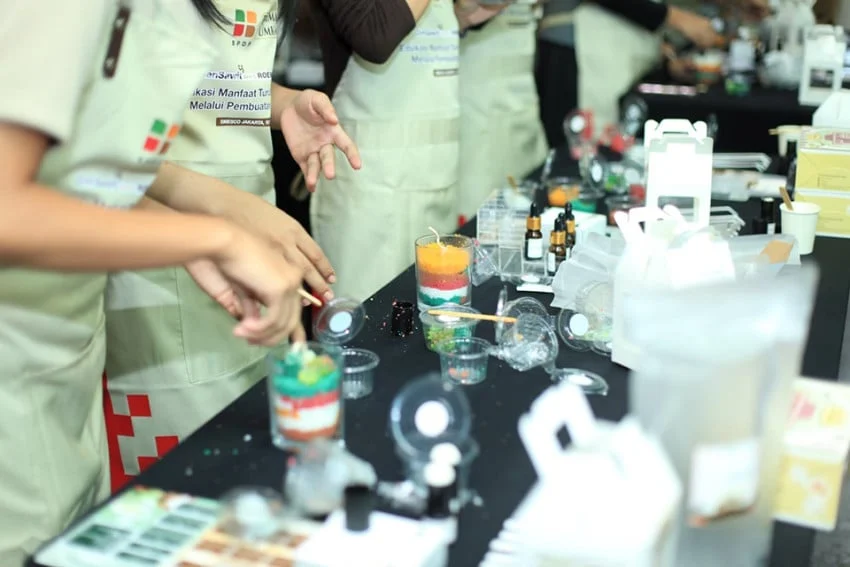
The highlight of the chronological itinerary was the live product experience session. Under the direct guidance of skilled MSME artisans, the participants took part in practical workshops focusing on the creation of lifestyle products, such as scented candles and solid perfumes, crafted from palm oil derivative ingredients. This practical engagement allowed the student activists to witness firsthand the versatility and high economic value achievable through downstream processing.
Background Context and Participant Profiles
The visit was unique due to the diverse and high-profile coalition of student organizations involved. The program brought together 22 female student activists (mahasiswi) representing 10 major national student organizations known for their active engagement in socio-political and economic discourse. These organizations included the Islamic Student Association (HMI), the Indonesian Muslim Student Movement (IMM), the Indonesian Islamic Student Movement (PMII), the Indonesian National Student Movement (GMNI), the Hindu Student Association of Indonesia (KMHDI), the Buddhist Student Association of Indonesia (HIKMAHBUDI), the Catholic Student Association of the Republic of Indonesia (PMKRI), the National Student League for Democracy (LMND), the Indonesian Muslim Student Action Union (KAMMI), and the Student Union of the Indonesian Republic (SEMMI).
Despite their diverse ideological and organizational backgrounds, these participants shared a unified interest in national entrepreneurship, economic self-reliance, and sustainable development. The choice to engage female student leaders was intentional, recognizing the pivotal role that women play in driving household economies, community-based businesses, and sustainable consumer choices across Indonesia.
Strategic Role of Roemah UMKM BPDP and Palm Oil Downstreaming
The establishment of Roemah UMKM BPDP at SMESCO Indonesia is a critical component of Indonesia’s broader strategy to promote downstreaming (hilirisasi) in the agricultural sector. Downstreaming shifts the national economic paradigm from raw commodity exportation to domestic value addition, creating resilient local supply chains and robust employment opportunities.
Palm oil is one of Indonesia’s most vital strategic commodities, playing an indispensable role in export earnings, rural employment, and poverty alleviation. However, public perception has occasionally been clouded by misinformation regarding sustainability and environmental stewardship. Initiatives like Roemah UMKM BPDP seek to demystify these misconceptions by demonstrating how palm oil is utilized not only in major industrial food products but also in cosmetics, pharmaceuticals, household goods, and creative economy applications.
By integrating MSMEs into the modern retail and collaborative ecosystem, BPDP empowers small business owners to scale their operations. The facility at SMESCO serves as a permanent showcase where visitors can observe the transformation of crude palm oil (CPO) and its derivatives into high-value consumer goods.
Supporting Data: The Impact of Palm Oil MSMEs in Indonesia

To contextualize the scale of the initiative, official economic data highlights the significant contribution of the palm oil sector to Indonesia’s GDP and rural livelihoods. Millions of smallholders manage a substantial portion of the nation’s total palm oil plantations. Integrating these smallholders into formal corporate structures—known as smallholder corporatization—is a primary focus of government policy supported by BPDP.
MSMEs operating within the plantation sector absorb millions of domestic workers. However, many small-scale entrepreneurs historically faced barriers related to product innovation, market access, regulatory compliance, and branding. Facilities like Roemah UMKM BPDP directly address these structural challenges by providing physical display spaces, mentorship programs, business matching events, and consumer engagement platforms.
The products showcased at the facility undergo rigorous quality control and creative development. The use of palm oil derivatives in non-food sectors—such as oleochemicals used in candles, soaps, and perfumes—demonstrates the infinite potential of the circular bioeconomy, reducing dependency on petrochemical alternatives and promoting biodegradable consumer goods.
Official Responses and Perspectives
While the event initially attracted public attention under the guise of an unexpected activist gathering, the collaborative nature of the dialogue reframed the narrative toward constructive engagement. Representatives from BPDP emphasized the importance of youth involvement in shaping the future narrative of Indonesia’s plantation sector.
"Engaging the younger generation, particularly student activists who voice public aspirations, is essential for fostering an objective and comprehensive understanding of our national commodities," noted a representative during the interaction. "When students witness the realities of downstreaming and interact directly with MSME artisans, they become powerful agents of accurate information within their respective campuses and communities."
Spokespersons from the participating student organizations expressed appreciation for the transparency and educational value of the visit. Several student leaders noted that exposure to the realities of palm oil processing provided a nuanced perspective that balanced environmental considerations with the undeniable economic imperatives of millions of domestic farmers and small business owners.
Broader Economic Implications and Future Outlook
The GenSawit Goes to Roemah UMKM BPDP event carries long-term implications for policy discourse, youth entrepreneurship, and public relations within the agricultural sector. As Indonesia continues to champion downstream industrialization, building domestic resilience is just as important as navigating international trade dynamics.
-
Enhanced Youth Literacy on Agriculture: By inviting student activists from diverse ideological spectrums, BPDP successfully fostered economic literacy among future opinion leaders. This reduces ideological polarization surrounding agricultural commodities and encourages evidence-based policy discussions.
-
MSME Empowerment and Market Expansion: Exposure to prominent student networks expands the visibility of participating MSMEs. Social media amplification by the 22 student representatives introduces sustainable local products to broader digital demographics.
-
Promotion of Sustainable Practices: Through educational modules embedded in the visit, the younger generation gains insight into the ongoing efforts to make Indonesian palm oil sustainable, traceable, and environmentally responsible.
-
Fostering Collaborative Ecosystems: The interaction between state agencies, academic youth, and grassroots entrepreneurs serves as a viable blueprint for future public-private partnerships aimed at national economic recovery and youth-led innovation.
As Roemah UMKM BPDP expands its programming, similar outreach initiatives are expected to target other academic institutions, professional associations, and community groups. Through sustained education and collaborative dialogue, the initiative aims to cement public appreciation for palm oil not merely as a commercial crop, but as a catalyst for inclusive, sustainable economic development across Indonesia.
