The Electoral Uprising: A Shift in Power
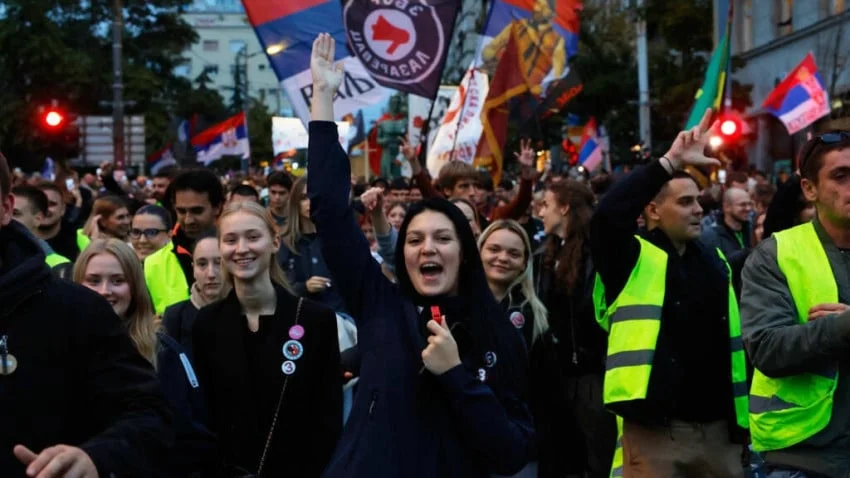
The victory of the "Student List" represents a significant departure from the political trajectory Serbia has followed for the past decade. Throughout the campaign, the movement galvanized the younger demographic, capitalizing on widespread dissatisfaction with economic stagnation, corruption allegations, and the perceived lack of transparency within the ruling coalition. The electoral results, announced on Sunday evening, confirmed that the established order had been dismantled, with voters favoring the platform of reform and structural change proposed by the student-led movement.
Aleksandar Vucic, who has been a central figure in Serbian politics for years, conceded defeat on Monday, marking a pivotal moment in the nation’s history. His coalition, "United Serbia," which had previously maintained a stronghold on national governance, struggled to counteract the momentum of a movement that effectively utilized digital mobilization and grassroots organizing. This outcome was not merely a defeat for a party, but a rejection of the status quo that had dominated Belgrade’s political scene for years.
Chronology of the Political Transition
The road to this electoral upset began months prior, as the "Student List" emerged from academic protests against administrative policies. By mid-year, the movement transitioned from localized demonstrations to a formal political coalition.
- Three Months Prior: The movement formally registered as a coalition, gaining traction in urban centers where youth turnout was projected to be high.
- Two Weeks Prior: Independent polling agencies noted a narrowing gap between the ruling "United Serbia" party and the "Student List," indicating an unprecedented surge in undecided voters leaning toward the opposition.
- Election Day (Sunday): High voter turnout across the country signaled a significant engagement, culminating in the late-night announcement of the "Student List’s" victory.
- The Following Monday: Official concession by Aleksandar Vucic, followed by an immediate formal statement from the Kremlin regarding the shift in power.
The Kremlin’s Stance: Diplomatic Pragmatism
The Russian Federation, which has historically viewed Serbia as a key strategic ally in the Balkans, has adopted a posture of cautious optimism. Kremlin spokesperson Dmitry Peskov, in his official briefing, addressed the transition with a focus on continuity. By acknowledging the constructive role that the outgoing Vucic administration played in maintaining bilateral ties despite mounting pressure from the European Union, the Kremlin signaled that its priority remains the preservation of its influence in the region.
"We hope that their actions will also be directed constructively toward the further development of our relations," Peskov stated. He emphasized that the new leadership in Belgrade should recognize that cooperation with Moscow is in the strategic interest of Serbia. However, the use of the metaphorical phrase, "it takes two to tango," underscores the reality that the Russian government is acutely aware that the "Student List" may harbor different geopolitical priorities compared to their predecessors.
Supporting Data: The Serbian Economic and Political Landscape
The electoral results must be analyzed within the context of Serbia’s current economic health. According to recent data from the Serbian Statistical Office, the country has faced significant inflationary pressures over the past 24 months, with consumer price indices rising at a rate that has eroded the purchasing power of the middle class. Furthermore, while the country has seen steady GDP growth, the benefits have been unevenly distributed, fueling the resentment that bolstered the "Student List."
- GDP Growth (Last Fiscal Year): 2.3%
- Inflation Rate: Averaging 8.5% throughout the previous year.
- Youth Unemployment: A critical factor, standing at approximately 19% in urban areas, which served as a primary catalyst for the movement’s recruitment efforts.
These indicators provide the quantitative evidence for why the "Student List" found such fertile ground for its message of "systemic renewal." By promising to tackle institutional inefficiencies and corruption, the coalition effectively framed the election as a choice between the past and a modern, reform-oriented future.
Implications for EU-Serbia Relations
The rise of the "Student List" places the European Union in a complex position. The EU has long pressured Belgrade to align its foreign policy more closely with Brussels, particularly regarding sanctions on Russia and the resolution of the Kosovo dispute. With the new government coming into power on a platform of domestic reform, it is unclear whether they will prioritize rapid EU integration or maintain the "multi-vector" foreign policy that characterized the Vucic era.
Analysts suggest that the new administration faces a "dual challenge." Internally, they must fulfill the high expectations of their young electorate, who anticipate immediate improvements in economic conditions and anti-corruption measures. Externally, they must manage the delicate balance between the economic allure of EU membership and the deep-rooted energy and security dependencies that bind Serbia to Russia.
Analysis: A New Era of Uncertainty
The transition of power in Belgrade is being viewed by political scientists as a litmus test for democratic resilience in the Balkans. The "Student List" victory highlights that even entrenched political machines are susceptible to shifts in voter sentiment when social and economic grievances reach a tipping point. However, the real test begins now, as the coalition transitions from an opposition movement to a governing body.
The Kremlin’s willingness to engage with the new government is a strategic move to ensure that, regardless of who occupies the Prime Minister’s office, the channels of communication remain open. Russia’s reliance on Serbia as a gateway to the Balkan peninsula is a matter of long-term policy, and the Kremlin is unlikely to abandon these efforts regardless of the ideological shift in Belgrade.
Conversely, the "Student List" must navigate the reality that Serbia’s economy is deeply intertwined with European markets. Any abrupt pivot in foreign policy could have immediate consequences for foreign direct investment (FDI) and EU accession progress. Therefore, the most likely outcome in the short term is a continuation of the diplomatic balancing act, albeit with a new set of faces at the negotiating table.
The Role of Media and Digital Mobilization
A critical factor in the success of the "Student List" was their adept use of digital platforms. By bypassing traditional media channels—which were largely perceived as being under the influence of the previous government—the student movement utilized social media to organize, disseminate their manifesto, and verify voter turnout in real-time. This "digital-first" strategy effectively neutralized the traditional propaganda tools that had historically protected the "United Serbia" coalition.
As the political landscape continues to evolve, the ability of the new administration to communicate its policies via these same channels will be essential to maintaining their mandate. The reliance on digital transparency represents a shift in political communication in the region, suggesting that future elections in Serbia will be fought and won on platforms that the traditional political establishment previously ignored.
Conclusion: A Future in Transition
The ousting of the long-standing power structure in Serbia is a historic development that signals a shift in the regional political order. While the Kremlin has extended a hand of cooperation, the "Student List" finds itself in a position of significant responsibility. They must satisfy a hungry electorate while managing the complex international pressures that define the Balkans.
The next few months will be critical. The formation of the new cabinet and the subsequent policy statements regarding foreign alignment will provide the first concrete evidence of the direction in which this new government intends to take the nation. For now, the international community, including both the European Union and Russia, remains in a state of watchful waiting, recognizing that the "Student List" has changed the map of Balkan politics in ways that are only just beginning to be understood.
As the new administration begins its term, the world will be observing whether this movement can translate its electoral momentum into sustainable governance, or if the pressures of statecraft will force a return to the pragmatic, if cautious, policies of the past. One thing remains certain: the political landscape in Belgrade has been permanently altered, and the implications of this change will reverberate throughout the European continent for years to come.