JAKARTA – The Indonesian Ministry of Hajj and Umrah has announced the near-completion of its extensive preparations for the 2026/1447 Hijriah Hajj pilgrimage, affirming that all essential services—ranging from accommodation and consumption to transportation and health—are meticulously organized for the nation’s 221,000 prospective pilgrims. This proactive approach underscores Indonesia’s unwavering commitment to ensuring a safe, comfortable, and spiritually fulfilling journey for its citizens embarking on one of Islam’s most sacred duties.
Proactive Planning for a Seamless Pilgrimage
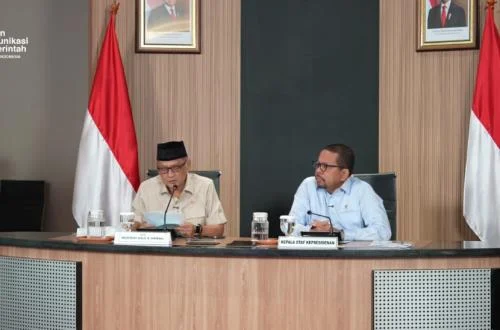
In a press conference held at the Presidential Staff Office in Jakarta on Wednesday, April 15, 2026, Mochamad Irfan Yusuf, the Minister of Hajj and Umrah, declared, "Preparations for Hajj services are almost 100 percent complete. The current stage involves a final comprehensive check of all services leading up to the commencement of Hajj operations." This statement highlights the rigorous planning and execution undertaken by the Indonesian government, which manages the largest contingent of Hajj pilgrims globally, a testament to Indonesia being the world’s most populous Muslim-majority nation. The immense scale of this operation necessitates meticulous coordination with Saudi Arabian authorities and a robust internal logistical framework to cater to hundreds of thousands of individuals simultaneously. The Hajj, a pilgrimage that every able-bodied Muslim is expected to undertake at least once in their lifetime, holds profound religious and cultural significance for Indonesians, often representing a culmination of years of saving and spiritual anticipation. Given the long waiting lists—which can extend for decades in some provinces—the opportunity to perform Hajj is deeply cherished, placing immense responsibility on the government to ensure its smooth execution.
Strategic Lodging in the Holy Cities
A critical component of the Hajj experience is accommodation, and the Indonesian government has spared no effort in securing suitable lodging for its vast contingent. For the 2026 Hajj, a total of 177 hotels have been prepared in Makkah, strategically located in key areas such as Jarwal, Misfalah, Raudhah, Syisyah, and Aziziah. These districts were chosen for their proximity to the Masjidil Haram, the Grand Mosque, and their accessibility to essential services and transportation hubs. While Jarwal and Misfalah are generally closer to the Haram, areas like Syisyah and Aziziah often offer more modern facilities and are well-connected by bus routes. In Madinah, 100 hotels have been secured, all situated within the Markaziah area, which is highly prized for its immediate vicinity to the Masjid an-Nabawi, the Prophet’s Mosque. This central location in Madinah minimizes travel time for pilgrims attending prayers and visiting sacred sites, enhancing their spiritual experience.
The selection process for these accommodations involves stringent criteria, including safety standards, hygiene, facilities (such as air conditioning and elevators), and accessibility for elderly and disabled pilgrims. Contracts are typically negotiated well in advance, often years ahead, to secure favorable rates and ensure sufficient capacity. Each hotel is meticulously inspected to meet the comfort and safety expectations of Indonesian pilgrims, reflecting the government’s commitment to providing a dignified stay. The distribution of pilgrims across these hotels is carefully managed to optimize logistical flows for meal distribution, health services, and transportation to and from the holy sites, particularly during the peak days of Hajj.
Robust Healthcare Network for Pilgrim Safety
The health and well-being of pilgrims are paramount, especially given the diverse age groups and health conditions among the Indonesian contingent. To address this, an extensive healthcare network has been established. In Makkah, 40 clinics are operational, complemented by 5 clinics in Madinah. These primary care facilities are bolstered by dedicated Indonesian Hajj Health Clinics (KKHI) in both Makkah and Madinah, which serve as central hubs for more complex medical cases and referrals. Each pilgrim group, or ‘kloter,’ is accompanied by at least one doctor and one health worker, ensuring immediate medical attention is available at the grassroots level.
Beyond primary care, the Indonesian government has forged a crucial partnership with Saudi German Hospital, one of Saudi Arabia’s leading medical institutions. This collaboration ensures that Indonesian pilgrims requiring specialized treatment, emergency care, or hospitalization have access to high-quality secondary and tertiary medical services. This comprehensive health strategy includes pre-Hajj health screenings conducted in Indonesia to identify potential health risks and provide necessary vaccinations. During the pilgrimage, the medical teams are equipped to handle common ailments such as heatstroke, respiratory infections, and exhaustion, which are prevalent due to the physical demands of the rituals and the often-hot climate. Psychological support is also integrated into the healthcare services, recognizing the emotional and mental strain that can accompany such a profound journey. Epidemiological surveillance is maintained throughout the Hajj period to monitor and prevent the spread of infectious diseases, working in close coordination with Saudi health authorities.
Orchestrating Pilgrim Mobility: A Multi-Tiered Transport System
Transportation is another critical pillar of Hajj logistics, designed to facilitate the seamless movement of hundreds of thousands of pilgrims across vast distances and crowded holy sites. The Indonesian government has meticulously organized a three-tiered bus system to meet these diverse needs. The first tier comprises intercity buses, responsible for transporting pilgrims along the main routes: Jeddah to Makkah, Makkah to Madinah, and Madinah back to Jeddah for departure. These routes are carefully managed to avoid congestion and ensure timely arrivals and departures from airports and holy cities.
The second tier is the ‘Shalawat’ bus service, a 24-hour intra-city shuttle operating continuously to transport pilgrims between their accommodations and the Masjidil Haram in Makkah. This service is vital, especially for pilgrims whose hotels are further from the Grand Mosque, allowing them to perform their prayers and rituals conveniently without relying on private transport or extensive walking. The Shalawat buses are a lifeline for many, particularly the elderly and those with mobility issues, enabling them to access the Haram multiple times a day.
The third and arguably most complex tier is the ‘Masyair’ bus service, dedicated to moving pilgrims during the core rituals of Hajj between Arafah, Muzdalifah, and Mina. This movement, known as the ‘Nafar’ or ‘Tashreeq’ days, involves moving millions of pilgrims simultaneously, presenting an unparalleled logistical challenge. The Masyair buses are crucial for ensuring that Indonesian pilgrims can fulfill their obligations, such as the ‘Wukuf’ (standing at Arafah) and the ‘Ramy al-Jamarat’ (stoning of the pillars) in Mina, efficiently and safely. This phase requires intense coordination with Saudi traffic management and security forces to manage the colossal flow of vehicles and pedestrians. The efficiency of these transportation networks directly impacts the pilgrims’ ability to complete their rituals on time and with minimal stress, underlining the importance of the government’s detailed planning.
Culinary Logistics: Sustaining Millions
Ensuring that pilgrims are well-fed with appropriate, hygienic, and culturally suitable meals is a significant undertaking. The Indonesian government has established an extensive catering operation, with 51 kitchens in Makkah and 23 in Madinah. These kitchens are responsible for preparing millions of meals throughout the Hajj period. The menus are carefully designed to cater to Indonesian tastes, providing familiar and nutritious food that helps pilgrims maintain their energy levels amidst the physically demanding rituals.
Food safety and hygiene are paramount, with strict protocols enforced at every stage, from ingredient sourcing to preparation and distribution. Regular inspections are conducted to ensure compliance with international food safety standards. The logistics of distributing meals to hundreds of hotels across Makkah and Madinah, often multiple times a day, is a monumental task requiring precise timing and coordination. Special dietary needs, such as vegetarian or allergen-free options, are also taken into consideration where feasible, although the scale of the operation often necessitates a standardized approach. Beyond meals, the provision of ample drinking water is also a crucial aspect of the consumption services, especially given the hot desert climate.
The Nusuk Card: Revolutionizing Pilgrim Identification and Services
In a significant move towards modernizing Hajj management, the ‘Nusuk’ card has been introduced. Minister Irfan Yusuf confirmed that these digital identification cards have arrived in Indonesia and are currently undergoing distribution and activation before the pilgrims’ departure. The Nusuk card is a smart card designed to streamline various aspects of the pilgrimage, serving as an official identification document for pilgrims, granting access to Hajj facilities and services, and enhancing security measures.
This technological innovation aims to curb illegal pilgrims, reduce overcrowding, and provide real-time data for better crowd management and emergency response. For pilgrims, it offers convenience, simplifying check-ins for accommodation, transportation, and health services. The card integrates with digital platforms, allowing for easier tracking of pilgrims’ whereabouts and ensuring that only authorized individuals access designated areas, particularly in the sacred sites. The distribution and activation process for 221,000 pilgrims is a massive logistical exercise in itself, requiring meticulous data management and technical support to ensure every pilgrim is properly equipped with their digital identity before leaving Indonesia.
Managing the World’s Largest Hajj Contingent
Indonesia’s Hajj quota for 2026, or 1447 Hijriah, has been set at 221,000 individuals. This substantial allocation is divided into two categories: 203,320 pilgrims for the regular Hajj program, accounting for approximately 92 percent of the total, and 17,680 pilgrims for the special Hajj program, representing the remaining 8 percent. The regular Hajj program is subsidized by the government and has a notoriously long waiting list, which in some regions can exceed 40 years, reflecting the deep desire of Indonesian Muslims to fulfill this religious obligation. The special Hajj program, managed by private travel agencies, offers more premium services but comes at a significantly higher cost.
The sheer size of the Indonesian contingent presents unique challenges and opportunities. It underscores the strong diplomatic ties between Indonesia and Saudi Arabia, as well as Indonesia’s capacity to manage such a large-scale international operation. The demographic profile of Indonesian pilgrims often skews older, with many having waited for decades, which further emphasizes the need for comprehensive health and accessibility services. The meticulous planning ensures that the experience for both regular and special Hajj pilgrims meets high standards of care and logistical efficiency.
A Spiritual Odyssey: Key Dates and Rituals for Hajj 2026
The spiritual journey of Hajj 2026 is scheduled to commence with the first batch of Indonesian pilgrims departing on April 22, 2026. These initial groups will typically fly directly to Madinah, allowing them to spend several days in the Prophet’s City before moving on to Makkah to begin their Hajj rituals. The final departure for pilgrims is set for May 21, 2026, ensuring all pilgrims arrive in Saudi Arabia well in advance of the core Hajj days.
The peak of the Hajj rituals, known as ‘Wukuf’ at Arafah, is estimated to fall on May 22, 2026. This day is considered the most important ritual of the Hajj, where pilgrims spend the day in contemplation and prayer on the plains of Arafah. Following Wukuf, pilgrims proceed to Muzdalifah for an overnight stay and then to Mina for the symbolic stoning of the devil (Jamarat) and other rituals, including animal sacrifice (Qurbani), shaving or trimming hair, and performing the Tawaf Ifadah (circumambulation of the Kaaba). The core Hajj rituals are expected to continue through May 26, 2026, encompassing the various stages in Mina and the final Tawaf Wada’ (farewell circumambulation) before pilgrims depart from Makkah. This meticulously planned timeline ensures that every Indonesian pilgrim has the opportunity to perform all the essential rites of Hajj in an organized and spiritually focused manner.
Bilateral Synergy: Indonesia and Saudi Arabia’s Joint Commitment
The successful execution of the Hajj for such a large number of pilgrims is a testament to the robust and continuous collaboration between the Indonesian government and the Kingdom of Saudi Arabia. This partnership extends beyond logistical arrangements, encompassing security, health protocols, and cultural understanding. Saudi authorities, including the Ministry of Hajj and Umrah and various security agencies, work closely with their Indonesian counterparts to facilitate the entry, movement, and welfare of Indonesian pilgrims. The introduction of initiatives like the Nusuk card is a direct outcome of this collaborative spirit, aiming to enhance the overall pilgrim experience and operational efficiency for all nations.
Officials from both sides regularly engage in dialogues to address challenges, share best practices, and plan for future Hajj seasons. The Saudi government, as the custodian of the Two Holy Mosques, has invested heavily in infrastructure development and technological advancements to accommodate the increasing number of pilgrims from around the world. Indonesia, in turn, contributes to this effort by ensuring its pilgrims adhere to regulations, are well-prepared, and respectful of the host country’s guidelines. This bilateral synergy is crucial for maintaining the sanctity and smooth operation of the Hajj, an event of global Islamic significance.
Beyond Logistics: Economic Impact and Future Vision for Hajj Management
The Hajj pilgrimage carries significant economic implications for both Saudi Arabia and Indonesia. For Saudi Arabia, the Hajj and Umrah industries are vital non-oil revenue streams, supporting local businesses, generating employment, and stimulating infrastructure development. Billions of dollars are spent annually by pilgrims on accommodation, transportation, food, and souvenirs, contributing substantially to the Saudi economy. For Indonesia, while pilgrims bear their own costs, the Hajj process involves a vast network of service providers, from travel agencies and financial institutions to medical personnel, creating an internal economic ecosystem.
Looking ahead, the management of Hajj is continually evolving. Climate change poses a growing challenge, with increasingly hot temperatures during the Hajj season, demanding enhanced cooling facilities, hydration strategies, and medical preparedness. Technological integration, exemplified by the Nusuk card, is expected to deepen, with future innovations potentially including AI-powered crowd management, real-time translation services, and advanced biometric identification. Indonesia’s commitment to continuous improvement means ongoing evaluation of services, feedback mechanisms from pilgrims, and adaptation to new technologies and global best practices. The goal remains to not only meet but exceed the expectations of its pilgrims, ensuring that the Hajj remains accessible, safe, and spiritually profound for generations to come.
In conclusion, Indonesia’s meticulous preparations for the 2026 Hajj reflect a profound dedication to its pilgrims. From the strategic allocation of accommodation and the robust provision of healthcare to the sophisticated transportation network and digital integration, every detail has been carefully considered. As the departure dates draw near, the focus remains on the final checks and the spiritual readiness of the 221,000 individuals embarking on this sacred journey, confident that the logistical groundwork has been laid for a truly blessed pilgrimage.